
Finishing
Lamination Coatings
A laminate is a thin film bonded over the printed sheet under heat and pressure — the layer that decides how a box feels in the hand and how well the print survives handling. Soft touch, matte, gloss, and silk, proofed on your own artwork before a run.
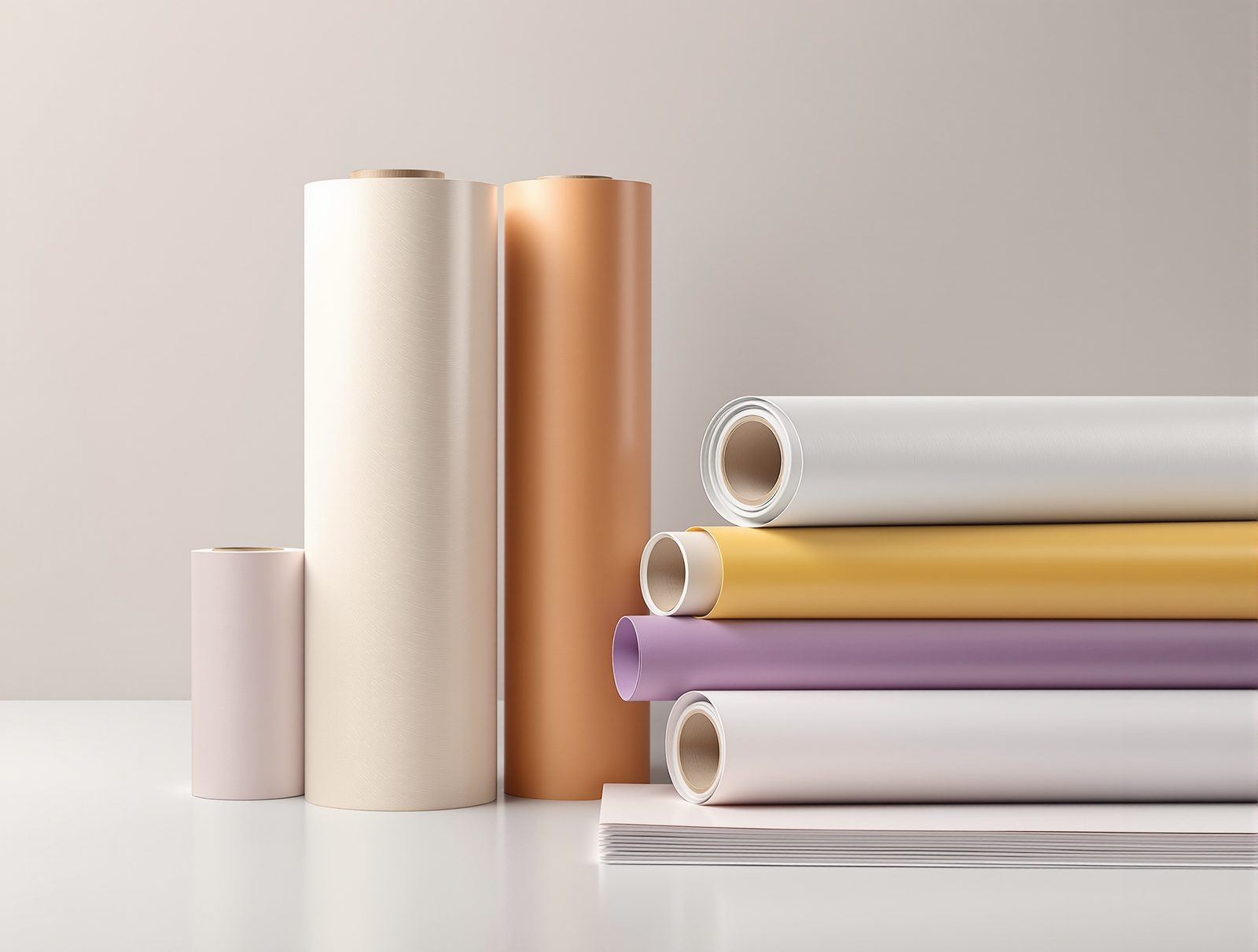
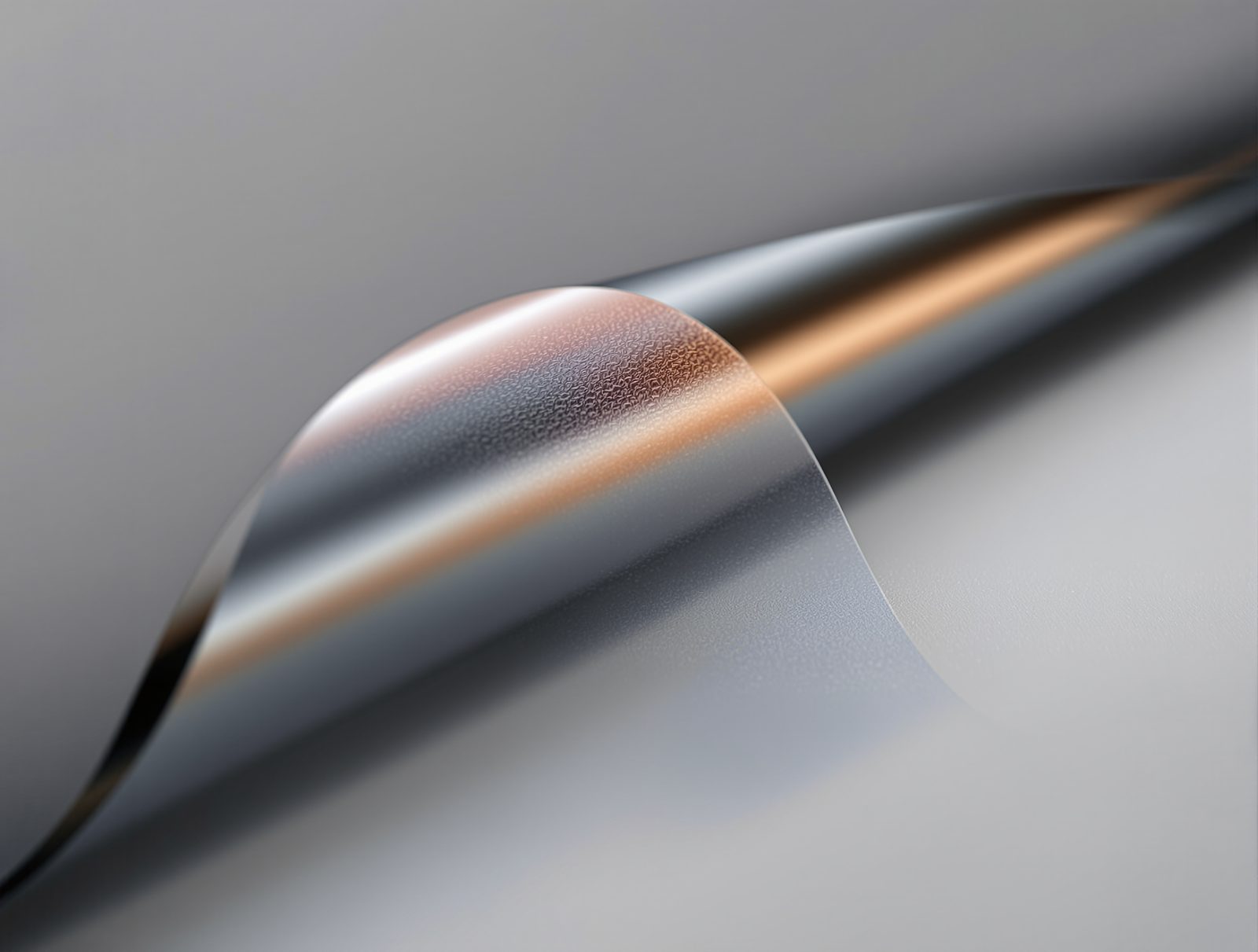
A lamination coating is a thin film bonded over the printed sheet under heat and pressure, sealing the ink beneath a continuous protective layer. It is the finishing decision buyers underestimate most: two boxes can carry identical artwork and read as entirely different products because one is wrapped in a soft-touch film and the other in high gloss. The laminate sets the hand feel, the light behavior, and how well the print survives shipping, shelf life, and repeated handling.
Soft-Touch Lamination
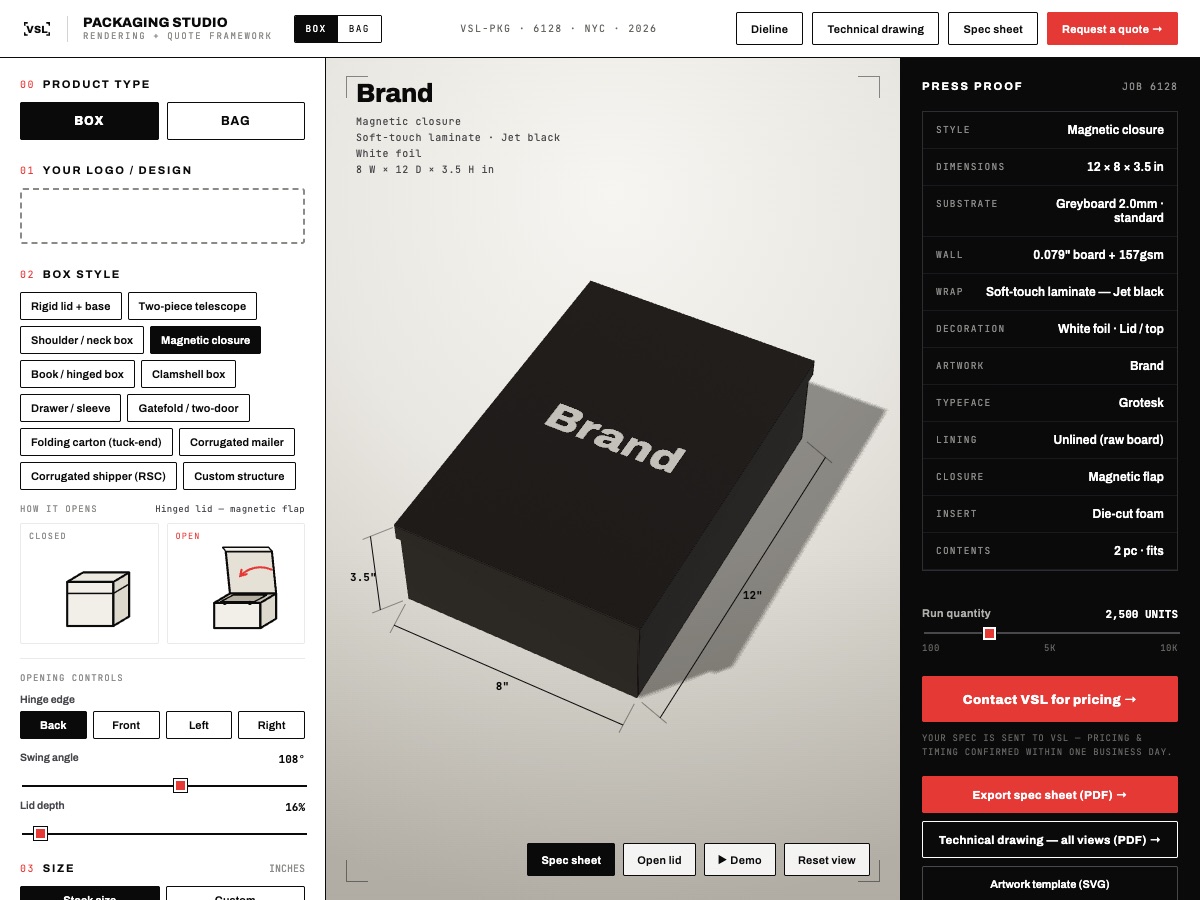
Soft-touch (sometimes called velvet or peach-skin) lamination is the finish behind most packaging that gets described as feeling expensive. The film has a micro-textured surface that scatters light into a deep, glare-free matte and gives the panel a suede-like drag under the fingertips. It darkens and mutes colors slightly — rich colors get richer, whites warm a touch — which is part of its character and worth checking on a physical proof. Soft touch pairs especially well with foil stamping and spot UV, because both read stronger against its dead-flat surface. It shows finger oils more readily than other films on very dark solids, another reason to approve a sample in hand.
Matte Lamination
Matte laminate kills glare across the whole panel and leaves artwork reading soft rather than reflective. It is the standard choice for understated, editorial-feeling packaging and the usual base layer under contrast finishes. Compared with soft touch it is smoother, slightly more sheen, and typically more economical.
Gloss Lamination
Gloss laminate does the opposite: it saturates color, sharpens contrast, and adds a wet-look shine that reads energetic and retail-ready. It is also the most scuff-forgiving of the common films, which makes it a practical choice for packaging that moves through parcel networks or gets handled heavily at retail.
Silk and Satin Lamination
Silk (satin) laminate sits between matte and gloss — a low-key sheen with a smooth, dry feel. It keeps colors truer than matte while avoiding the shine of gloss, and it resists fingerprinting better than either extreme, which is why it is a frequent default for packaging that will be handled a lot before purchase.
Scuff-Resistant and Specialty Films
Beyond the core four, laminating stock comes in anti-scuff variants engineered for dark, heavy-coverage art that would show every scratch, and in textured films — linen and other embossed patterns — that add tactility without a separate embossing pass. Which film a job needs depends on the artwork, the substrate, and the trip the box has to survive; that call gets made against a physical proof, not a screen.
Lamination vs. Varnish and UV Coating
A laminate is a bonded film; a varnish or UV coating is a liquid applied and cured in-line. Coatings are thinner, less protective, and less tactile, but faster and more economical for lighter-duty work. As a rule of thumb: if the box's feel is part of the brand experience, or the artwork needs real protection through shipping and handling, laminate; if the job needs modest protection at volume, a coating may be enough. Spot UV sits in its own category — a targeted gloss accent, usually run over a matte or soft-touch laminate for contrast.
Choosing a Lamination for Your Packaging
The fastest way to choose is to hold the options. We proof laminates on your own artwork and substrate as part of the standard prototype step, so the soft-touch-versus-silk decision is made with the physical thing in hand rather than from a description. Tell us what the packaging has to do — luxury unboxing, retail shelf, parcel network — and request a quote; a project manager follows up within one business day.
Lamination Coatings FAQ
What is soft-touch lamination? A laminate film with a micro-textured, velvet-like surface that produces a deep matte look and a suede-like feel. It slightly darkens colors and pairs well with foil and spot UV accents.
Does lamination protect the printed artwork? Yes — the film seals ink under a continuous layer, protecting against scuffing, moisture, and finger oils far better than bare or varnished stock. Gloss and anti-scuff films offer the most protection; soft touch trades some scuff resistance for its feel.
Can lamination be combined with other finishes? Routinely. Foil stamping, spot UV, embossing, and debossing are all run over laminated stock — matte and soft-touch films are the usual base because accents contrast strongly against them.
Start the Conversation
Tell us the product and where it is headed — we will scope the work before anything goes to press.