
Boxes
Shelf-Ready Boxes
Corrugated cases engineered to skip the stockroom — tray-and-hood, perforated, and die-cut display constructions that a store associate opens once and sets straight on the shelf, cut and printed in New York City.
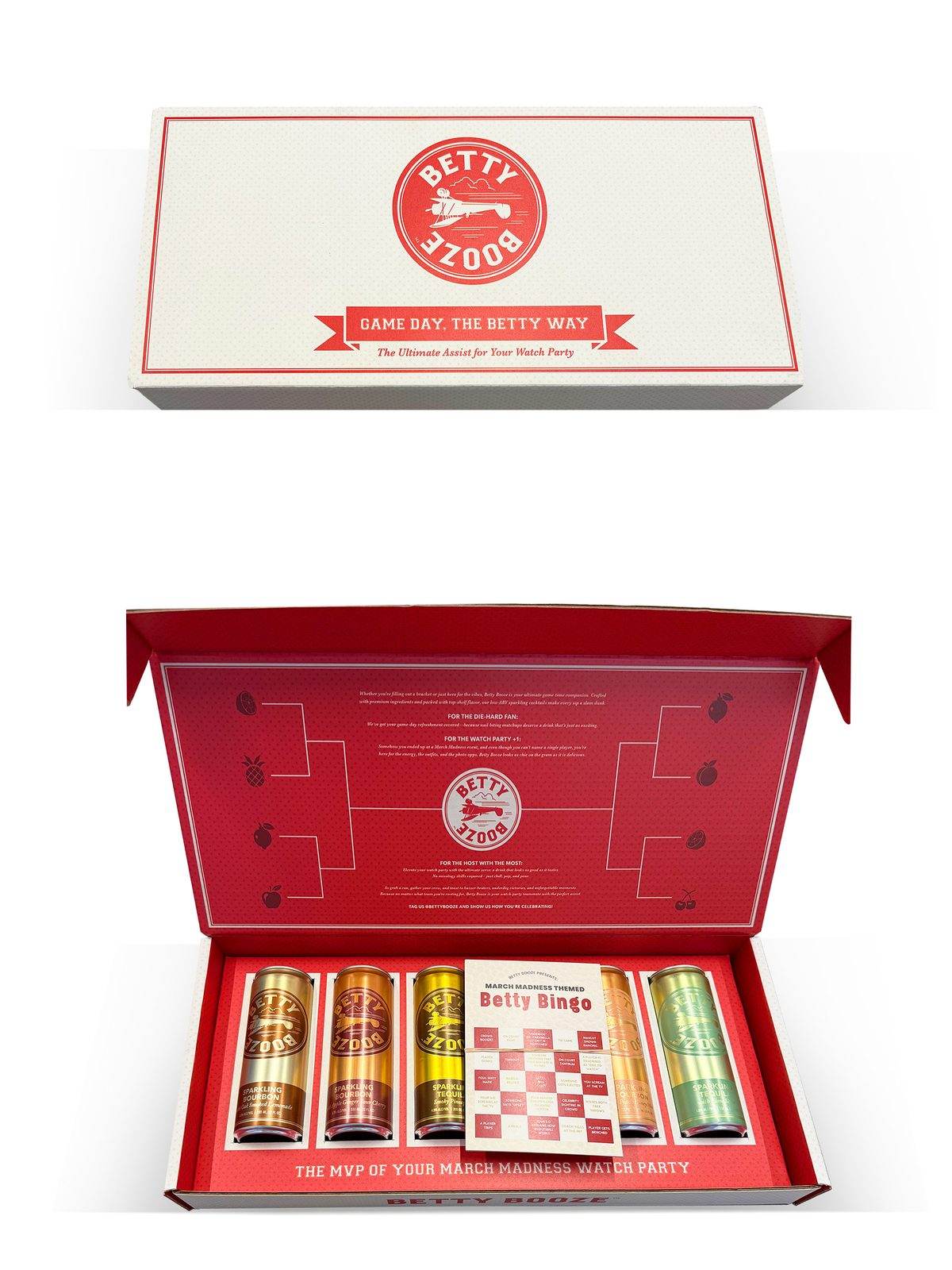
Constructions
Tray-and-hood, perforated case, and die-cut display
Board Grades
Single- and double-wall corrugated
Printing
Flexo or full-coverage litho-laminate
Shelf Setup
One-touch open, no repacking
A shelf-ready box, often shortened to SRP, is a corrugated cardboard case engineered to do two jobs with one structure: it ships the product, then it becomes the display that captures impulse purchases a plain shipping case never gets the chance to earn. A standard shipping case gets sliced open, unloaded by hand, and broken down for the baler. A shelf-ready box opens once — a hood lifts off, a perforation tears free, or a die-cut panel folds down — and the case itself sits on the shelf as the display, product facing out and branding intact. We build custom shelf-ready boxes in New York City as part of the custom packaging we manufacture for retail and e-commerce brands, engineered around the product's dimensions and the retailer's shelf depth rather than pulled from a generic case size chart.
What Makes a Case Shelf-Ready
"Shelf ready" isn't a material or a print style — it's a construction requirement. A standard case is built to survive transit and then get broken down; a shelf-ready case is built to survive transit and then get displayed, with both jobs engineered into the same dieline from the start. That means the case has to open in one motion, hold its shape once it's opened, and keep its printed face forward once product is sitting on the shelf. Retail-ready packaging earns the name by passing all three tests, not just the first one — plenty of printed corrugated cases look retail-ready on a rendering and still need to be unpacked by hand once they hit a stockroom.
Tray-and-Hood, Perforated, and Die-Cut Display Constructions
Most shelf-ready boxes we build come as custom packaging, in one of three constructions, chosen against the product's weight, count per case, and how the retailer's planogram wants it faced:
- Tray-and-hood — a base tray and a separate top hood that lifts away entirely, so what was a fully enclosed case becomes an open-face tray with the product sitting at shelf height.
- Perforated case — pre-scored tear lines run around the case body, letting a store associate strip the top away by hand instead of reaching for a box cutter that risks nicking the product inside.
- Die-cut display case — a fully die-cut front panel folds down or pulls free on a scored hinge, facing product outward while the rest of the case keeps the strength profile of a standard shipping box for stacking and freight.
The tray-and-hood approach borrows directly from our corrugated trays line, where a display tray is built the same way — a lower front wall, sometimes a printed header, cut to sit on a shelf or endcap once the outer shell is gone. If your product is already speccing a tray for in-store presentation, a shelf-ready hood is usually the same tooling with a shipping-grade base underneath it. All three constructions exist to deliver retail-ready packaging without adding a repack step at the store.
Retail-Ready Requirements: One-Touch Shelving
Retailers grade shelf-ready packaging against a specific, narrow standard: can a store associate move the case from the dock to the shelf in one motion, with no knife, no repacking, and no separate display fixture to assemble. That's what "one-touch" means in practice — the case that arrives on the truck is the same object sitting on the shelf an hour later, just missing a hood or a perforated top. A retail-ready case that still needs someone to lift each unit out and place it individually hasn't solved the labor problem it was built to solve; it's just a nicer-looking shipping case. We engineer the perforation lines and hood tolerances so the case holds together through a stacked pallet and a delivery truck, then gives way cleanly the moment someone needs it to — and comes apart without tearing through the printed panel underneath, so the graphics a shopper sees on the retail shelf are the same clean artwork that shipped in the warehouse, keeping the customer experience consistent from dock to shelf.
Packaging Design for Brand Colors and the Shopper's Experience
A shelf-ready case is a piece of packaging design as much as it's a structural one, because the same panel that has to survive a pallet also has to win a half-second glance down a crowded aisle. Brand colors carry more weight here than on a box a customer sees up close — from a few feet away, color and shape register before anyone reads a word of copy, which is why we match brand colors precisely across the case and any point-of-sale material running alongside it. That visual consistency is most of the customer experience retailers care about at shelf: a shopper who recognizes a case at a glance is having a smoother experience than one squinting at a small logo, and that's what turns a display into a source of impulse purchases rather than just an efficient way to restock. Packaging design is the only lever a brand has to win that half-second before a customer reaches for the product.
Shelf-Ready Boxes vs. Standard Shipping Cases
Not every product needs shelf-ready construction, and it's worth being direct about when the added engineering pays for itself. A regular slotted container is cheaper to tool and simpler to print, and it's the right call for anything unpacked into a cooler, a backroom bin, or a warehouse shelf where the outer case never faces a shopper. Shelf-ready construction earns its cost at the point of sale — grocery, mass, and club retailers that grade vendors on stocking labor, and any account where the case itself becomes the display rather than disappearing into a stockroom. The honest question is whether a store associate ever touches your product between the case and the shelf; if the answer is yes, retail-ready packaging is custom packaging worth the extra tooling. That decision is packaging design as much as it's structural engineering, and it's worth making with your account team before tooling starts. Our full custom boxes lineup covers both ends of that decision, so you're not locked into one construction before we've seen the product.
Producing Shelf-Ready Packaging: Materials, Printing, and Order Sizing
Choosing among packaging materials follows load, the same as any corrugated cardboard format: single-wall covers most case counts, and double-wall steps in for heavier goods like glass, bottled beverages, or dense grocery and produce shelf-ready packaging that has to hold its shape stacked three or four high in a stockroom. Printing runs in flexo for one- or two-color branding at volume, or full-coverage litho-laminate where the graphics need to compete for attention on a crowded shelf; for a first run or a seasonal SKU change, digital printing keeps setup cost down while you confirm the artwork works at shelf distance before committing to plates. Beverage and canned-goods accounts are some of the most common shelf-ready customers we work with, since a case of cans stacks cleanly and displays well straight out of a tray-and-hood construction with no repack step at all.
Shelf-Ready Boxes FAQ
What's the difference between a shelf-ready box and a standard shipping case? A standard shipping case is built to survive transit and gets broken down by hand once it reaches the stockroom. A shelf-ready box is retail-ready packaging: engineered to open in one motion — a hood, a perforation, or a die-cut panel — and sit directly on the retail shelf as the display, with no repacking step in between.
How many units do I need to order shelf-ready boxes? It depends on case size, board grade, and finishing, since those drive tooling cost more than the format itself does. Tell us the product, the case pack, and the store count you're shipping to and we'll scope a run and a construction specific to that order.
Can shelf-ready boxes double as a shipping case for e-commerce orders? Often, yes. Because the base structure still has to survive a pallet and a delivery truck, the same case that converts to a shelf display on the retail side can usually serve as the outer shipping unit for a direct-to-consumer order, so a brand isn't maintaining two separate packaging design programs for the same product.
Ready to convert a shipping case into a shelf display? Request a quote with your product dimensions, case pack, and store count, and our packaging design team will scope the construction that fits.
VSL Packaging — 239 West 29th Street, Ground Floor, New York, NY 10001 Phone: 1.646.843.0800 · Email: sales@vslpackaging.com
Constructions & Use Cases
Ways We Build This Format
Price Your Run
Product dimensions, quantity, and any finish ideas — we will quote structure, material, and print.