

Boxes
Slide Type Boxes
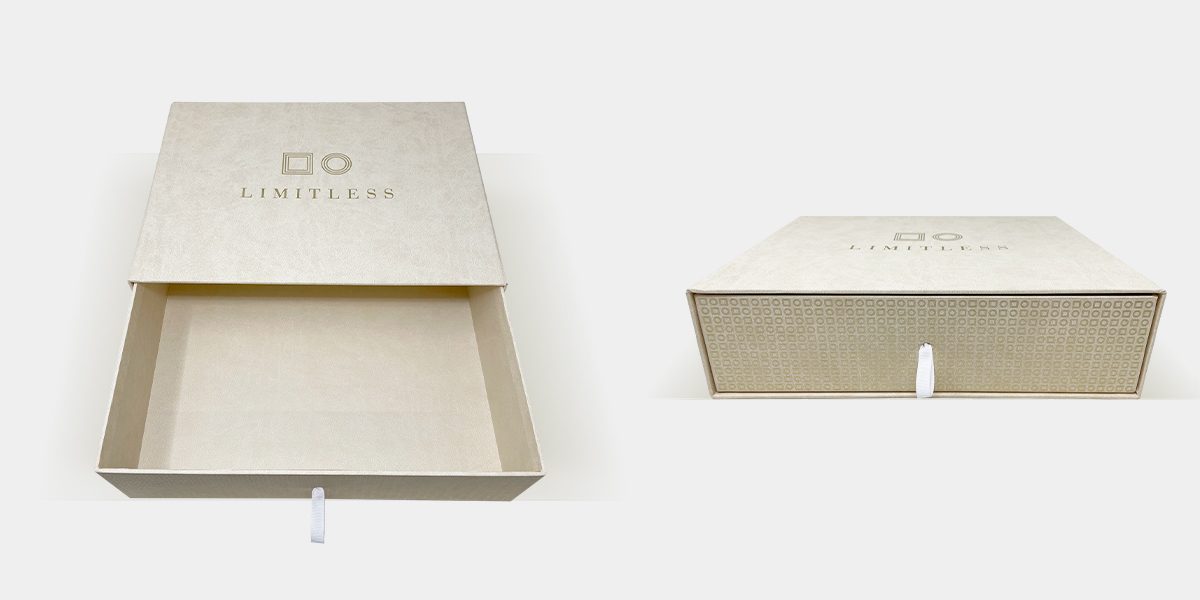
A fitted tray that carries the product inside an outer sleeve that slides over it like a matchbox — cut and tolerance-tested as a prototype in-house in Manhattan before a job goes to press.
Construction
Outer sleeve over a fitted inner tray
Grip
Ribbon or cloth pull anchored to the tray base
Sleeve Print
Offset or digital, plus foil, emboss, deboss, or spot UV
Tray Stock
Heavier-caliper paperboard or rigid substrate
A slide-type box is really two pieces doing one job: a fitted tray that carries the product and an outer sleeve that slides over it like a matchbox. Pull the sleeve, and the tray glides out clean — no lid to lose, no hinge to strain. It's a small piece of engineering that reads as luxury the moment someone's hands touch it, which is why we build so many for jewelry, cosmetics, small electronics, and gift sets in New York City. Buyers often search for this as sliding boxes, slide box packaging, or box packaging with a sleeve, and we build all of it as custom boxes sized to the product first.
Sleeve-and-Tray Construction, Explained
Think of the classic matchbox and you've got the mechanics right. The tray is the structural half — sized to the product with just enough clearance for the sleeve to travel smoothly, but not so much that the box rattles in transit. The sleeve is the presentation half, wrapping three or four sides and staying open on the pull end so the tray has somewhere to go. Get the tolerances wrong by even a millimeter: too tight and the slide binds, too loose and the box feels cheap. That precision is why sliding boxes get prototyped in-house before a full print run, not eyeballed from a spec sheet.
Some of our slide jobs go further into drawer box territory, where the inner tray is deep and rigid enough to double as a display piece — lift the sleeve off and the drawer sits on a shelf or counter looking finished on its own. These sliding drawer gift boxes are a popular move for jewelry, cosmetics counters, and prestige gift sets where the box needs to work at the point of sale, not just in shipping.
The Slide Reveal — and How Ribbon Pulls Fix Its One Weakness
The reveal is the whole point of this format. A well-tuned slide delivers resistance on the way out — enough to feel deliberate, not so much that it feels stuck — and that friction does real marketing work, making the box packaging itself part of the unboxing performance. It's a paced reveal instead of a lid flying open, and for gift-forward categories that pacing is worth more than most people expect from cardboard.
The one design problem with a snug tray is grip: a tight-fitting inner box is hard to pull with fingertips alone, especially on smaller boxes like jewelry cases. That's what a ribbon pull solves. We anchor a ribbon or cloth tab to the base of the tray so a light tug does the work fingers can't, and it doubles as a finishing detail — a contrast color or printed ribbon dresses up the reveal further. We spec ribbon pulls on most jewelry and small-electronics runs for that reason; it removes the single most common complaint about slide boxes.
Where Slide Boxes Earn Their Keep
- Jewelry — rings, pendants, and watch boxes benefit from the tray's built-in structure, which holds foam or velvet inserts steady while the sleeve protects finish and stones from scuffing. We often build these as custom rigid boxes for the extra edge crispness jewelry needs. For brands building a full line, our jewelry packaging work covers insert design alongside the box.
- Cosmetics — palettes, fragrance sets, and skincare duos photograph well because the sleeve becomes a second canvas for branding while the tray keeps product upright.
- Small electronics — earbuds, chargers, and accessories need snug, shock-resistant fitments, and the two-piece build lets us engineer foam or paperboard cavities into the tray without touching the sleeve's print.
- Gift sets — multi-item bundles use the tray to keep components from shifting into each other, which matters more here than in a lid-and-base carton since there's no top flap holding things down. Many of these ship as sliding gift boxes with a ribbon pull for easy opening.
Materials and Printing: Sleeve vs. Tray
We treat the two halves differently on purpose. The sleeve is what a customer sees first, so it usually carries the higher print investment — offset or digital full color printing, then a finish like foil stamping, embossing, debossing, or spot UV to make the logo catch light as the box slides open. Sleeve-and-tray styles range from a simple kraft wrap to a fully wrapped rigid box, so the presentation options scale with the unboxing moment you want. The tray, by contrast, is chosen for performance over show: a heavier-caliper paperboard or rigid substrate that holds its shape under repeated friction without softening at the corners, often lined or wrapped to match the sleeve's palette without the full print run.
Stock choice depends on the category. Rigid, wrapped paperboard reads as premium for jewelry and prestige cosmetics — for buyers weighing box types, our rigid-construction guide page breaks down when that heavier build earns its cost versus a folding-carton sleeve. Slide rigid boxes like these are the format's premium tier — wrapped rigid stock in place of a folding-carton sleeve, and they hold their edge under repeated sliding. We also source recycled and biodegradable stocks and low-impact inks for sustainability-minded brands, without giving up the crisp edges a slide mechanism depends on. These customization options span every category we build for, from small electronics to home goods.
Slide vs. Telescope: Picking the Right Two-Piece Format
Slide boxes aren't the only two-piece system we build. If your product is oversized or needs a lid that lifts straight up rather than pulls sideways, a telescoping design — where the lid nests fully over the base — may fit better. Our page on telescope type boxes walks through that comparison.
Frequently Asked Questions
What's the difference between a slide box and a drawer box? They're close cousins. A slide box is the general sleeve-and-tray system; a drawer box is one where the inner tray is built rigid and deep enough to stand alone as a display piece once the sleeve is removed — common on retail counters for jewelry and cosmetics.
Do slide boxes need a ribbon pull? Not always, but we recommend one whenever the tray fits snugly, which is most of the time, since a loose fit undermines the point of the format. A ribbon pull makes the tray easy to grip without loosening the tolerances that give it a premium feel.
Can a slide box be produced in small runs for a new product launch? Yes. We prototype the sleeve-and-tray fit in-house before a full print run, so a first-time brand can test the mechanism and the unboxing feel on a short run — well below a typical minimum order quantity for rigid construction — before scaling up.
Is there a minimum order quantity for slide type boxes? It varies by construction — a drawer box with rigid stock has a different minimum than a simple kraft sleeve — so tell us the product and target quantity and we'll quote the minimum that makes sense.
VSL Packaging designs and produces custom slide type boxes in New York City. Contact us to prototype your sleeve-and-tray design.
Constructions & Use Cases
Ways We Build This Format
Price Your Run
Product dimensions, quantity, and any finish ideas — we will quote structure, material, and print.