Abilities
Packaging Rendering
Photorealistic 3D box mockups built straight from your structural dieline and artwork, so you can review proportions, finish, and shelf presence on screen instead of guessing from a flat proof.
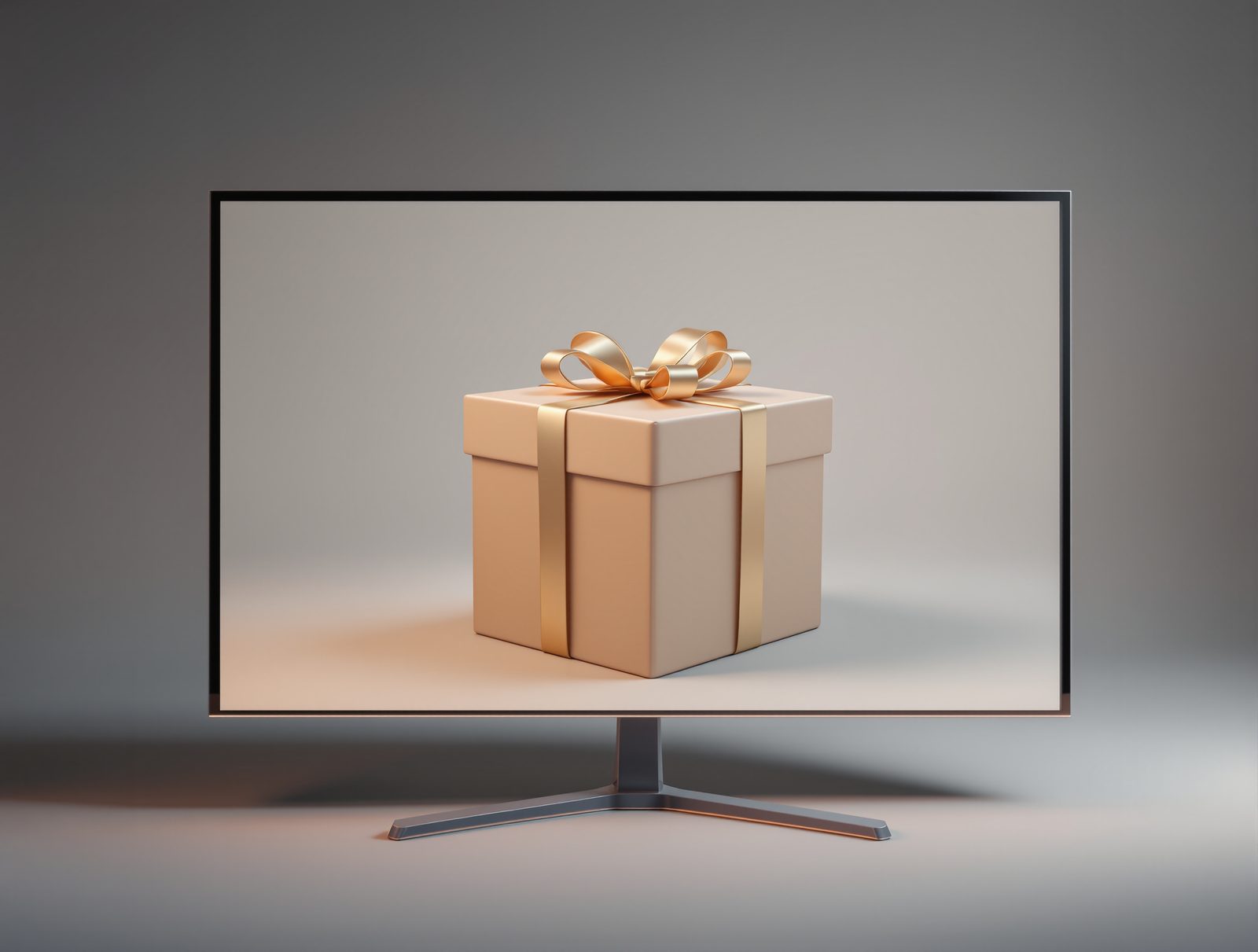
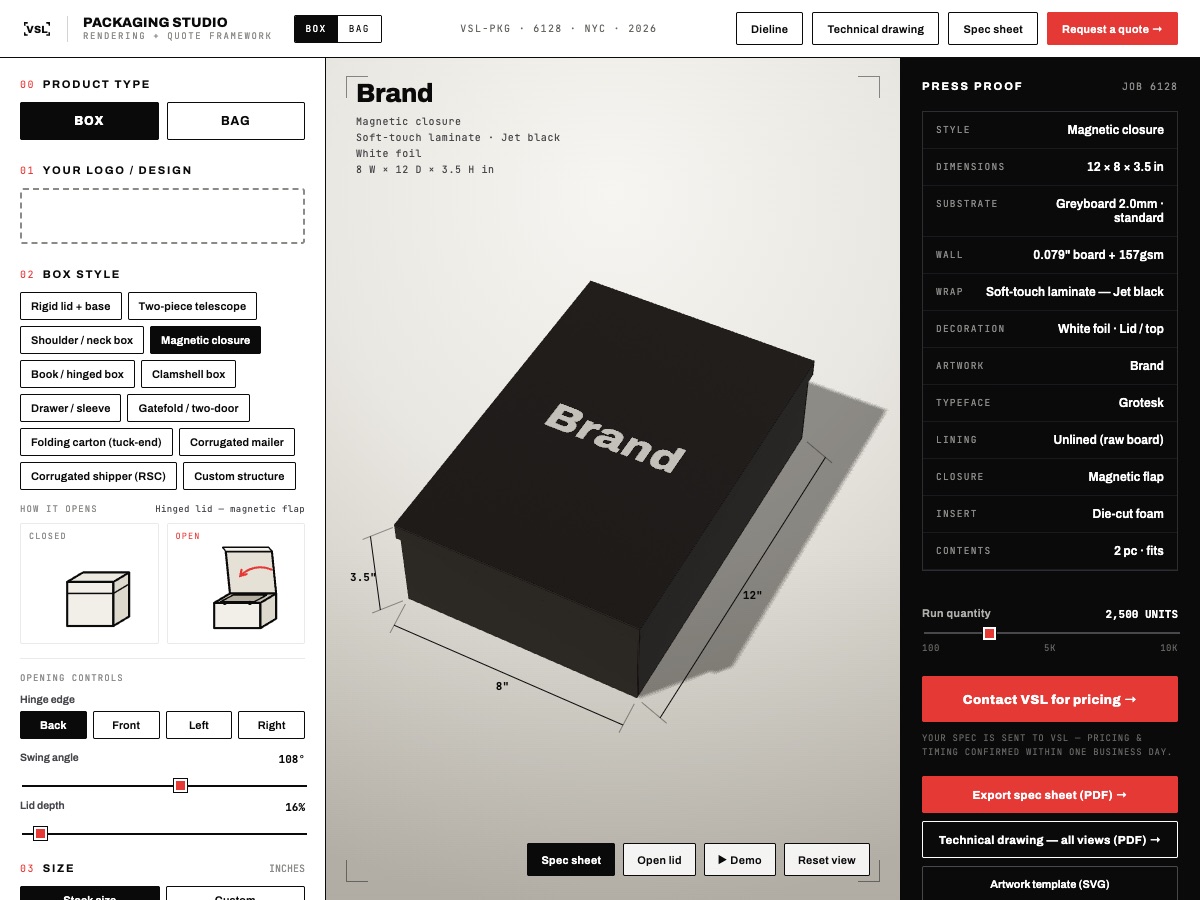
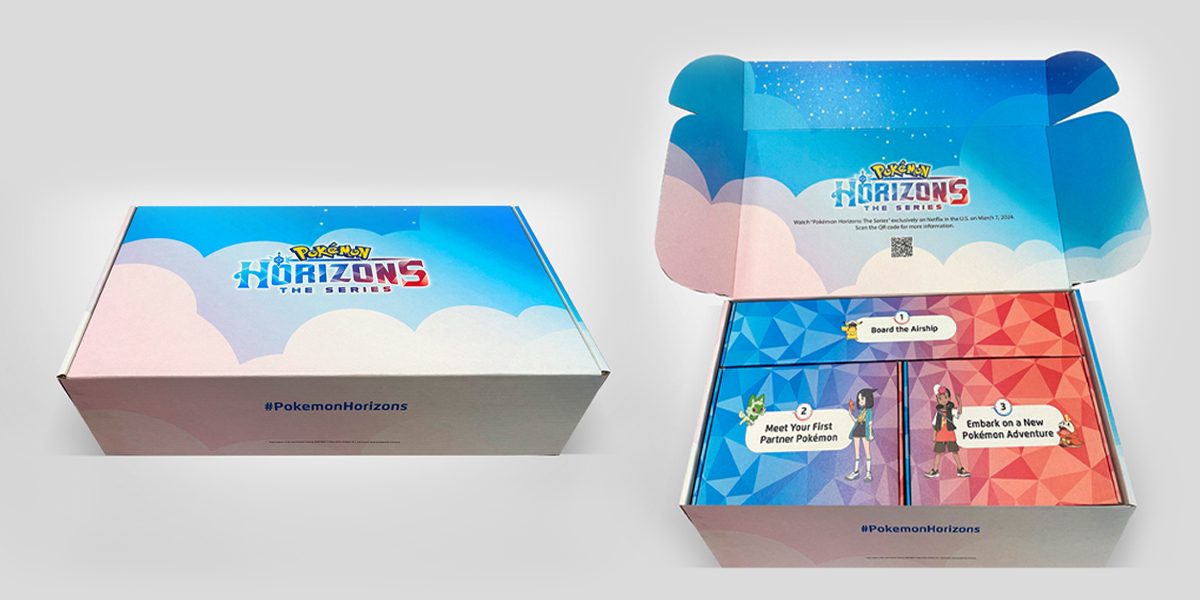
At VSL Packaging, packaging rendering is how you see a box before it exists. We build photorealistic 3D box mockups straight from your structural dieline and artwork, so you can review proportions, finish, and shelf presence on screen instead of guessing from a flat proof. As a New York City packaging manufacturer that designs, produces, and finishes boxes, bags, mailers, and POP displays, we treat packaging rendering as a working step in production, not a marketing add-on — which is why our renders map to the same files that later drive cutting and folding in production. Packaging rendering — sometimes called 3D rendering or CGI packaging renders — has become a powerful tool for brands that need to make packaging decisions before physical material exists.
What a Photorealistic Packaging Render Shows You
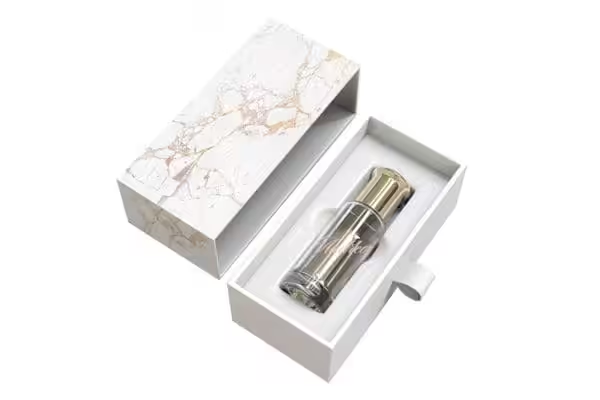
A generic stock mockup shows a box. A packaging render shows your box: true wall thickness, real panel proportions, and the exact finish you specified. To build a 3D packaging rendering, we map your artwork onto an accurate dieline for the style you've chosen — rigid box, folding carton, mailer, or shipper — then light and shade the model to show how ink, coating, and texture will actually read. Called for a spot UV hit over foil, or a soft-touch matte laminate? The render shows the contrast against the substrate, not just a callout on a spec sheet. That gap, between a finish described and a finish shown, is usually where packaging renders earn their keep. We build for photorealistic rendering rather than a stylized illustration because the model has to be accurate enough to support a real material and lighting decision, not just look good in a deck.
From Dieline to 3D Rendering: How the Workflow Runs
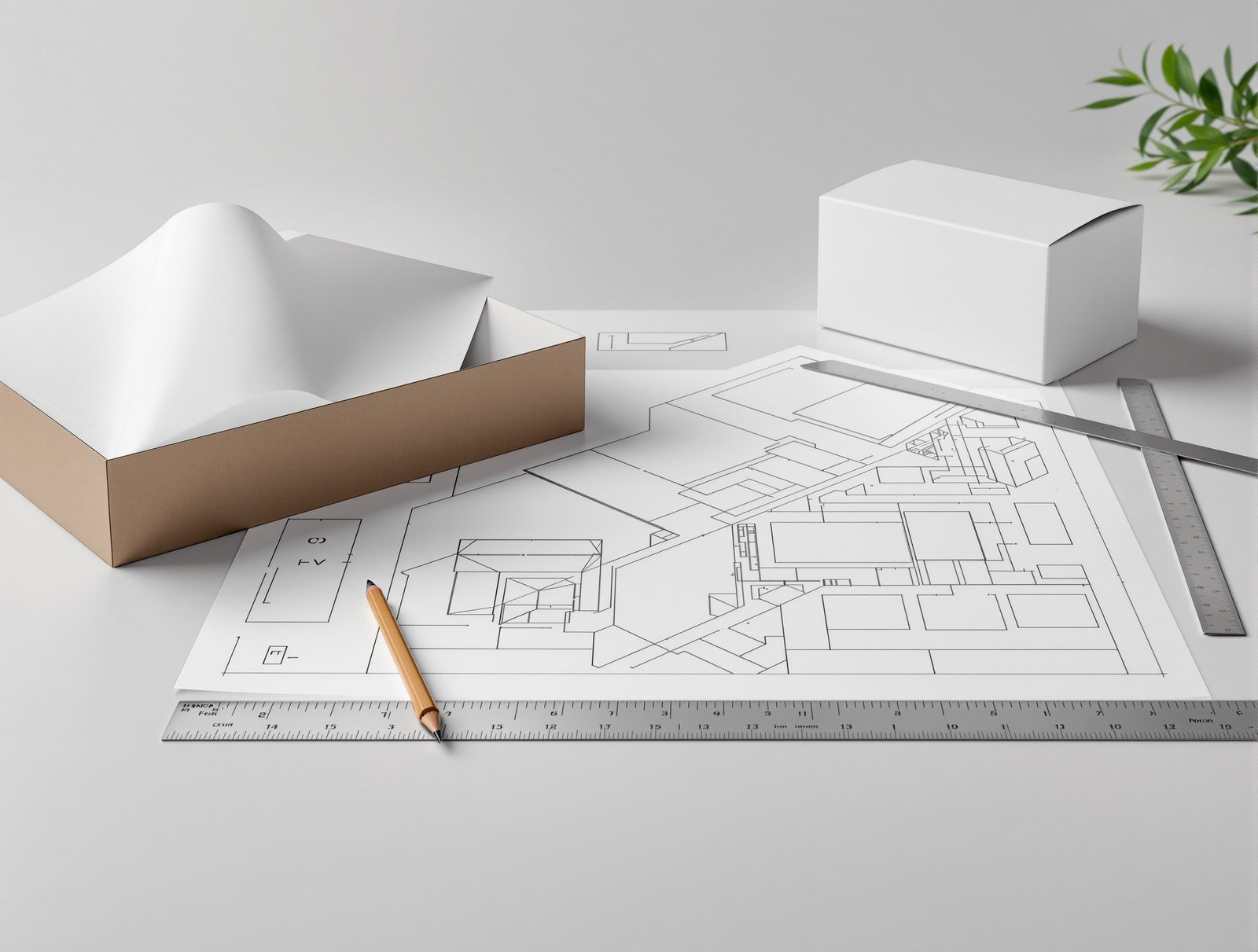
Every accurate render starts upstream, in packaging design. Once your structural dieline and graphics are locked, we build a 3D model of the actual box — not a flat template — and wrap your print-ready artwork, usually supplied from Adobe Illustrator or a comparable design program, around it panel by panel. From there we set material (kraft, coated stock, rigid board), apply the specified finish, and light the scene to match how the box will actually be seen: on a shelf, in an unboxing shot, or under trade-show lighting. The output is a 3D packaging render ready for a sales deck, marketing campaigns, an online listing, or an internal approval email — packaging visuals available well before tooling or plates are cut. Because the model is built from the same dieline that drives production, a change approved in the render — a panel width, a die-cut window, a color — carries forward instead of getting redrawn by hand later.
Packaging Render vs. Physical Prototype
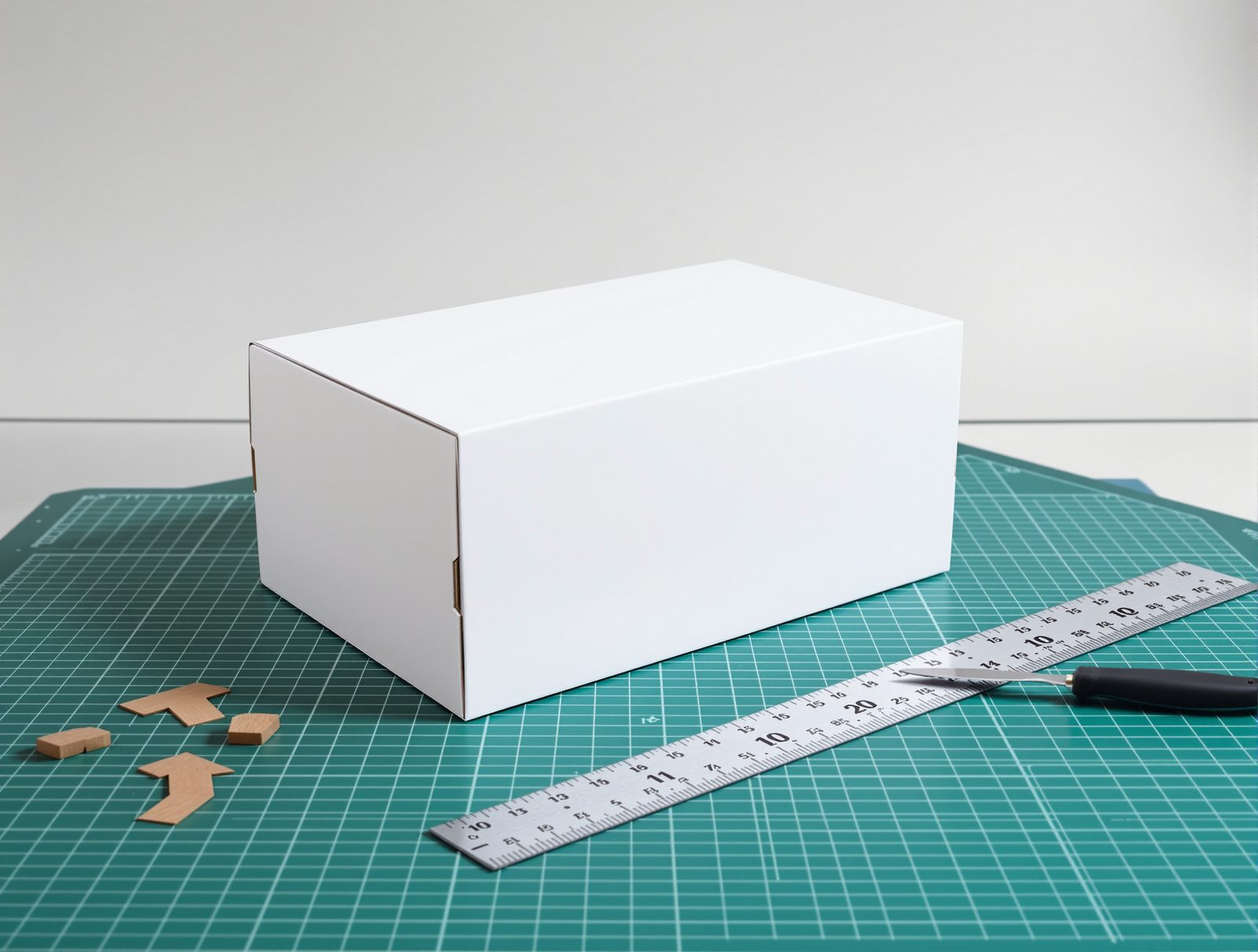
A render answers whether a design looks right, which is often the question a product design or marketing team needs answered fast, before budget commits to a full prototype cycle. A hands-on sample answers whether it works right. We use packaging rendering to settle graphics, color story, and finish before we touch material, which skips a full prototype cycle when the open question is cosmetic rather than structural. But no render can tell you how a folding carton actually scores and folds, how a rigid box lid seats, or how a shipper holds up loaded and stacked on a pallet — that's what a hand-built prototype is for. Most projects run a render first, a prototype second, and a proof alongside to lock color before the full production run. Keeping these as separate, sequential checkpoints, rather than one blurred approval, is what keeps a packaging launch on schedule.
Where Packaging Renders Do the Work
Packaging renders earn their keep anywhere a physical sample can't travel fast enough: investor decks, retail buyer meetings, crowdfunding pages, e-commerce listings, and internal sign-off between marketing and operations. We produce packaging renders across the styles we manufacture — folding cartons, rigid boxes, mailers, and shippers among them — for brands in apparel, beauty, beverage, cosmetics, and other consumer goods categories, where shelf presence has to be right on the first try. High-quality renders need to hold up in front of a buyer or an investor the same way a physical sample would, and that is the standard we build every one to meet. Whether you need a single hero render for a pitch deck or a full set showing every finish option side by side, we scope the work the way we scope a production run: around the decision you're trying to make, not a fixed package.
Packaging Rendering FAQs
What's the difference between packaging rendering and packaging design? Packaging design is the structural and graphic work: the dieline, the layout, the artwork. Packaging rendering happens after — we take that finished design and build a photorealistic 3D model so you can see the box as a real object, under real lighting, in the specified finish, before anything goes into production.
What do you need from me to start a 3D packaging render? A locked structural dieline and print-ready artwork produce the most accurate 3D packaging render. If either is still in progress, we can rough one in alongside the design work and refine it as the dieline and graphics finalize — useful when you need something to show internally while the design is still moving.
Can a render replace a physical prototype before production? For color, layout, and finish decisions, often yes. For anything structural, like how a box folds, closes, seats, or holds weight, you'll still want a physical prototype in hand before committing to a full run. We treat packaging rendering as the fast checkpoint and the prototype as the final one.
Start the Conversation
Tell us the product and where it is headed — we will scope the work before anything goes to press.