

Boxes
Regular Slotted Containers
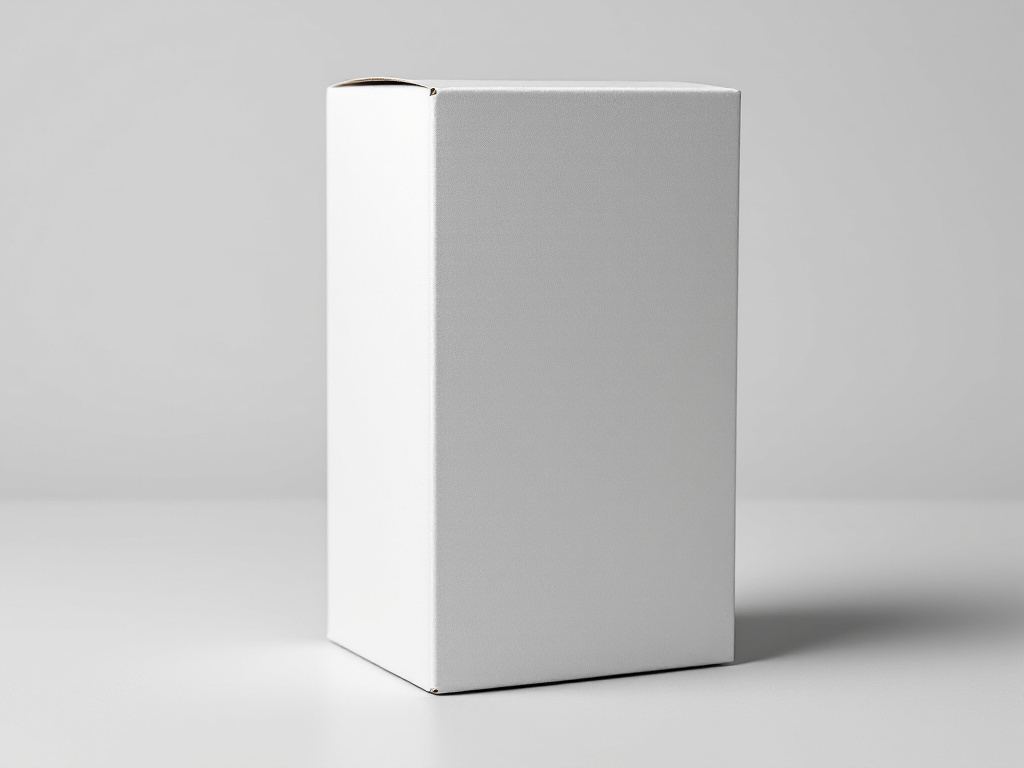
The standard four-flap corrugated box: four flaps fold in from the top, four from the bottom, and each set meets edge-to-edge at the center of the panel without tape reinforcement or a separate lid. Built and printed in New York City.

Construction
Eight equal-length flaps meeting at the center
Board Grades
Single-, double-, and triple-wall
Flute Profiles
B and E for print, C for general shipping
Board Facing
Natural kraft or white
A regular slotted container — RSC for short — is the standard four-flap corrugated box that moves most of the world's freight and e-commerce orders. Four flaps fold in from the top, four more fold in from the bottom, and each set meets edge-to-edge at the center of the panel, forming a complete, self-contained closure without tape reinforcement, a separate lid, or any outside hardware. We build custom regular slotted containers in New York City, from single prototypes through full wholesale runs, sized and printed to the product going inside.
RSC Construction: How the Flaps Close
The RSC's defining feature is geometry, not material. All eight flaps — four on top, four on bottom — are cut to the same length, so when they're folded inward they meet precisely in the middle rather than overlapping unevenly or leaving a gap. That symmetry is what makes an RSC easy to automate on a packing line: the same fold sequence works every time, regardless of what's loaded inside. Because the box is a single piece of corrugated board scored and slotted before shipping flat, it also nests efficiently in a warehouse until it's needed, then pops into a full case in seconds.
Regular Slotted Container vs. Half Slotted Container (RSC vs. HSC)
The comparison we get asked about most is RSC versus HSC. A regular slotted container has matching flaps on both ends that fold together into a sealed case — the format most people picture when they hear "cardboard box." A half slotted container skips the top set of flaps entirely, leaving that end open for a cap, pallet wrap, or oversized load that a folded closure can't accommodate. If your product ships as a uniform, stackable unit that needs to be fully enclosed, an RSC is almost always the right call. If it's bulky, irregular, or built for palletized freight rather than an individually sealed case, the open-top format earns its place instead.
Board Grades and Flute Profiles
Every RSC starts as a board decision. Single-wall corrugated — one fluting layer between two liners — covers most retail and e-commerce shipments efficiently. Double-wall adds a second fluting layer for heavier goods, glass, or anything stacked deep in a truck, and triple-wall steps up again for industrial loads and long-haul freight. Flute profile matters just as much as wall count: B-flute and E-flute give a smoother, more print-friendly surface for retail-facing cases, while C-flute balances cushioning against crush resistance for general shipping. We spec board and flute together against your product's weight and fragility before cutting a dieline, working from the same corrugated cardboard stock we run for every other box style in the shop.
Custom Printing on Kraft or White Board
An RSC can ship out as a plain shipping case or as a fully branded piece of unboxing experience — the board choice usually decides which. Natural kraft keeps a raw, sustainable look and takes flexographic printing well for logo stamps and one- or two-color branding at wholesale volume. White board gives full-color graphics more contrast and reads closer to a retail shelf box, which matters when the RSC doubles as a display case once it's opened. Either way, printing and die-cutting are handled together, so a branding change doesn't mean waiting on an outside converter to fit you into their schedule.
E-Commerce and Wholesale Use Cases
RSCs cover two very different jobs well. For direct-to-consumer brands, the closed, tamper-evident construction protects a single order through last-mile handling while still giving you a branded surface for the unboxing moment — many of our customers use the same dieline as their primary shipping boxes across every SKU. For wholesale and distribution accounts, the RSC's flat-ship, fast-assembly design keeps pallet loads efficient and cuts labor time on the packing line, since every case folds and seals the same way regardless of who's running the station that day.
Other Corrugated Box Styles: CSSC, FOL, and Design-Style Trays
An RSC is one box style among several corrugated box styles built around how the top and bottom panels close. Two others come up often enough to be worth knowing.
A center special slotted container, or CSSC, cuts its flaps to different lengths so concentrated loads sit at the center of the bottom panel rather than spreading evenly across it — a fix for products that carry more weight in the middle than at the edges, where a standard RSC's symmetrical, same-length flaps would leave the center underprotected. A center special build costs a little more in tooling than a standard RSC but earns it back in targeted strength. A full overlap slotted container, or FOL, goes the opposite direction: every flap runs the full width of the panel instead of meeting at the center, doubling the board coverage on top and bottom for heavy or fragile freight that needs more crush resistance than a standard corrugated box provides.
Beyond the slotted-container family, corrugated box styles also include the "Design Style" category — mostly five-panel folder and tray-type constructions rather than four-flap closures — built for retail-facing presentation instead of pure shipping strength. We build across all of these from the same board stock and flute grades as our standard RSC line; tell us how the load is distributed, its length and width, and whether it's shipping or shelf-facing, and we'll recommend the box style that fits.
Sizing a Custom RSC
Stock sizes waste board and drive up dimensional-weight shipping costs, so we build custom RSCs around your product's actual footprint rather than the nearest size off a chart. Send us length, width, height, and typical load weight, and we'll prototype a dieline sized for a snug fit with just enough clearance for void fill. Reordering the same SKU is simple once a size is locked — production files stay on hand, and wholesale quantities move straight from proof to press run.
Regular Slotted Container FAQ
What is a regular slotted container? A regular slotted container (RSC) is a corrugated box with four equal-length flaps on the top and four on the bottom. Each set folds in and meets at the center of the panel, creating a complete closure without extra hardware, tape reinforcement, or a separate lid.
What's the difference between an RSC and an HSC? A regular slotted container has flaps on both ends and closes into a fully sealed case. A half slotted container has flaps on one end only, leaving the other open for a cap or pallet wrap — better suited to oversized or palletized loads than a standard closed case.
Can I order custom regular slotted containers in bulk? Yes. We size, print, and prototype every RSC to your product's dimensions in New York City, then move approved designs into wholesale production runs with the same dielines on file for reorders.


Price Your Run
Product dimensions, quantity, and any finish ideas — we will quote structure, material, and print.