

Packaging
Custom POP Displays
Counter units, floor displays, PDQ trays, and endcaps — designed, prototyped, printed, and assembled in New York City, from a single counter card to a multi-SKU national rollout.
Formats
Counter, floor, PDQ tray, and endcap
Printing
Flexo or full-coverage litho-laminate
Finishing
Gloss, matte, and spot UV
Assembly
Kitted and labeled to your store count
A shelf sells the product that's already been chosen. A display sells the one a shopper wasn't looking for. That's the job custom POP displays do, and it's why point of purchase units earn shelf space most packaging never gets — the checkout lane, the aisle end, the floor space next to the register. We design, prototype, print, and assemble custom POP displays in New York City, from a single counter card to a multi-SKU floor unit built for a national rollout. The point of purchase concept works because it meets a shopper at the exact moment they're reaching for their wallet, not before it and not after — so the display has to earn its keep in seconds, not minutes.
Counter Displays, Floor Displays, and PDQ Trays
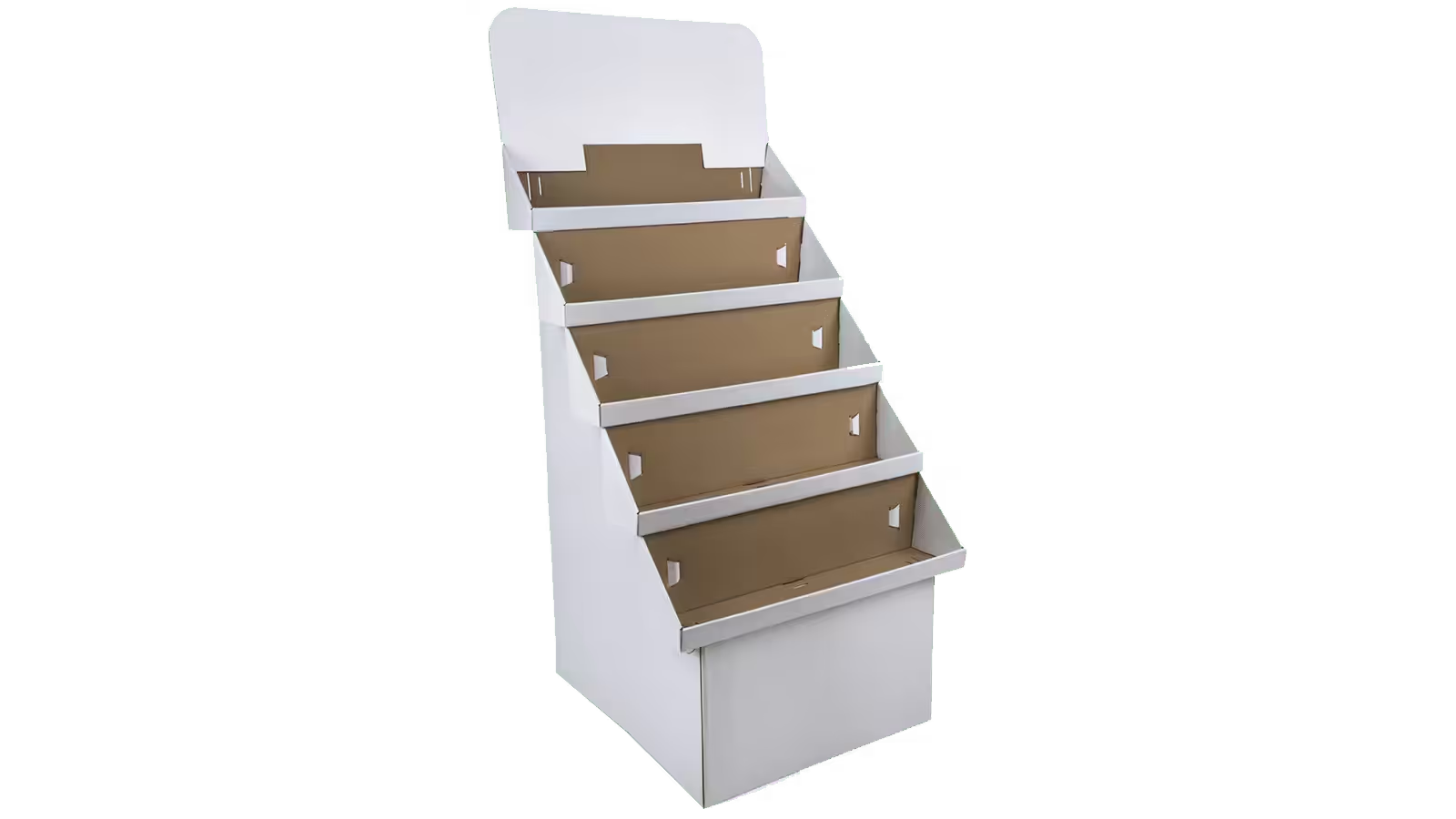
Most point of purchase programs start with a format decision, and the right one depends on where the retailer will actually put it. Counter displays sit next to the register, small footprint, built for impulse items and last-second add-ons. Floor displays stand on their own, engineered to hold a full case pack of product without a shelf or fixture underneath them, and they're the format most brands picture when they say "custom pop displays." PDQ trays split the difference: a shallow, printed tray that ships pre-loaded and drops straight onto a shelf or hook strip with no repack labor at store level. A PDQ tray is really a shorter, retail-facing version of our corrugated trays, scored to the same flute logic but cut with a lower front wall so the product faces out instead of sitting inside a closed case. Endcaps close out the format list — larger structures built to wrap the end of an aisle, usually spec'd for a specific SKU count and a promotional window rather than year-round placement.
Cardboard and Corrugated POP Displays
Almost everything on this page is built from corrugated board, and that's a deliberate choice rather than a cost compromise. Cardboard displays ship knocked down flat, which cuts the freight a fifty-store program needs against a welded metal fixture, and a stock clerk can set one up without tools. Corrugated pop displays also turn the entire structure into a printed surface — a litho-laminated panel carries photographic artwork a powder-coated fixture can't. The tradeoff is lifespan: a corrugated point of purchase display is spec'd for a promotional window, not a decade on the sales floor. We grade board weight and flute against how long the unit has to stand and how much product it has to carry, so a cardboard display holding cases of liquid is built on heavier stock than one holding lip balm.
Point of Purchase Display Program Rollouts
A display that works as a one-off prototype doesn't always survive a fifty-store rollout, which is where most point of purchase programs actually break down. Case counts have to match store allocation, pack-out instructions have to be simple enough for a stock clerk to follow without a call back to the vendor, and the display has to knock down flat enough to ship efficiently before it pops back up at the store. We build every retail-ready packaging program around that constraint from the first prototype, not after the first complaint comes back from the field. For a wider retail rollout program, we also confirm pallet configuration and delivery windows against the retailer's own receiving rules, since a display that misses a scheduled delivery slot often sits in a stockroom instead of on the floor.
Corrugated Display Engineering, Prototyping, and 3D Rendering
Every custom POP display we build starts as a structural engineering problem before it becomes a graphics one. We model load paths in 3D, confirm that the corrugated cardboard tray or panel construction underneath the graphics will actually hold the product weight it's rated for, and cut a physical prototype so you can check fit and stability before committing to a production run. That prototyping step catches the failures a rendering can't — a floor display that racks under its own case weight, or a header card that won't stay upright once product is loaded. Corrugated pop displays built this way hold up through a full promotional cycle instead of collapsing halfway through it, which matters more to a retail buyer than how the rendering looked in the pitch deck.
Print and Assembly
Graphics carry as much weight as structure on a point of purchase display, since the whole point is stopping a shopper who wasn't already looking for the product. We print in flexo or full-coverage litho-laminate depending on run size and image detail, and finish with gloss, matte, or spot UV where a display needs to stand out under store lighting. Assembly happens as part of the same process too — trays glued and locked, header cards mounted, kits packed and labeled to the store count you give us, so what arrives at the loading dock is ready to build, not a box of loose parts and a diagram.
Custom Retail Displays That Protect Product and Build Brand
Every point of purchase format on this page is, at its core, one of several custom retail displays — engineered to hold product securely, survive a promotional run on the sales floor, and carry brand graphics the whole time it's doing it. Retail displays fail in two common ways: they don't protect the product through repeated handling, or they don't survive long enough to earn back their tooling cost. We build custom displays to avoid both, grading board weight and flute against the materials being displayed and how many times a day a customer picks one up and puts it back. Counter, floor, and PDQ formats all get the same engineering scrutiny, because a display that protects the product and carries the brand consistently is what separates a real point of purchase program from a cardboard stand that collapses by week two. For businesses running a multi-store rollout that matters more, not less — store-level care is inconsistent, so we test load paths and case weight before a single unit ships, and kit and label every display to your store count before it ships.
Working With a Point of Purchase Display Manufacturer
Plenty of pop display companies are designers with a Rolodex — they'll draw the unit and place the job with a converter, which works until a prototype comes back wrong and nobody in the chain can say why. We're the converter. Structural design, 3D rendering, die-cutting, printing, and assembly all happen in New York City, so a change to a shelf angle or a header height gets cut and re-checked here instead of routed through a third party. It also means one point of purchase display manufacturer can handle the display and the packaging that fills it — same team, same color standard, same delivery. When a display and the product cartons inside it come from different vendors, the mismatch tends to show up under store lighting rather than on the proof.
Custom POP Display FAQ
What's the difference between a PDQ tray and a floor display? A PDQ tray is a shallow, pre-loaded tray that drops directly onto an existing shelf or hook strip — no separate fixture required. A floor display is a freestanding structure that holds its own case pack and stands on the floor, usually at an aisle end or near the register, independent of any shelf.
How long does a custom POP display program take from concept to store delivery? It depends on structure and finish, but every program starts with a physical prototype, not a rendering, so you can confirm fit and stability before committing to a print run. Simpler counter displays move through production faster than a full endcap with litho-laminate graphics and multi-SKU assembly, so it's worth flagging store count and delivery windows early.
Do you manufacture the displays yourself, or outsource production? We manufacture them. Structural design, prototyping, printing, die-cutting, and assembly are all managed out of New York City, which is why a revision gets cut and re-checked here rather than routed overseas and back for a second round of shipping.
Do you build both short-run promotional displays and permanent fixtures? Yes. Some programs need a display that survives a single promotional window and gets discarded; others need a permanent, heavier-duty structure built to hold up on the floor for a year or more. We spec board weight, flute grade, and assembly method against which one you actually need before production starts.
Constructions & Use Cases
Ways We Build This Format
Related Formats
Price Your Run
Product dimensions, quantity, and any finish ideas — we will quote structure, material, and print.