

Boxes
Corrugated Trays
Open-top, die-cut corrugated trays in rolled-end, self-locking, and display styles — cut and scored to the product's real footprint rather than pulled from a stock size chart.

Tray Styles
Rolled-end, self-locking, and display
Flute Grades
B, C, E, and double-wall
Printing
Flexo or full-coverage litho-laminate
Prototyping
A sample cut from your actual specs first
A corrugated tray is an open-top, die-cut container built from corrugated cardboard instead of solid paperboard — the fluted layer inside the walls gives it crush resistance a flat carton doesn't have, at a lower cost per unit than a full box. We manufacture corrugated trays in New York City, cutting and scoring every run to the product's real footprint rather than pulling from a stock size chart. Buyers searching for cardboard trays wholesale are usually weighing tray style, flute grade, and minimum run size before they lock in a supplier — this page covers all three, and where each style earns its keep. Kraft board keeps an eco-friendly option on the table without giving up crush resistance.
Tray Styles: Rolled-End, Self-Locking, and Display
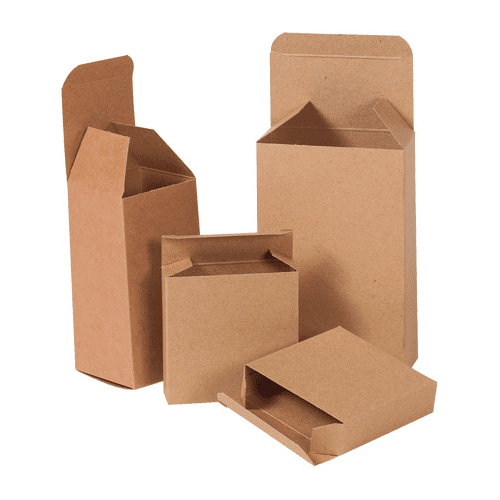
Most corrugated tray orders fall into one of three constructions. A rolled-end tray uses the same doubled, rolled edge you'd find on a heavier shipping case — the end panels roll over before scoring, reinforcing the tray's weakest point without adding a second ply across the whole blank. A self-locking tray skips glue and tape entirely: the corners fold and tuck into slotted joints that hold the tray's shape under load. Self-locking trays often borrow the same rolled, double-wall base you'll find on our roll end tuck top boxes, which is what lets a tray hold its shape and stack weight without adhesive. Display trays are the third style, and the one most retail buyers ask for by name — shallow, open-face trays cut with a lower front wall and sometimes a printed header card, built to sit on a shelf or endcap and present product face-out instead of just containing it. All three styles start from the same corrugated cardboard; the difference is in how the blank is scored and where the walls lock.
Shelf-Ready Packaging and Retail Display
Display trays double as shelf-ready packaging once we cut a perforated or removable top panel into the case — store staff pull the lid, and the case itself becomes the shelf tray, making restocking easier for stores displaying multiple SKUs at once. For counter and endcap placement outside the main shelf set, we build lighter trays that double as POP displays, holding product upright while keeping branding visible from the aisle. Both formats print the way a shipping case does, in flexo or full-coverage litho-laminate graphics, so the tray a shopper sees on the shelf carries the same branding as the case it shipped in.
Produce, Food Service, and Industrial Loads
Corrugated trays move a wide range of product because the flute structure absorbs vibration and stacking weight a flat tray can't, keeping items secure for any business shipping mixed pallets. Produce packers use vented, wax-free trays for fruit and vegetables that need airflow in cold storage; food-service operators use grease-resistant coated trays for bakery, deli, and prepared-food runs; and industrial buyers use heavier double-wall trays to cradle parts and components moving through a warehouse. We've built corrugated trays for cosmetics, electronics, and food-service accounts, and the geometry stays similar across categories — only the flute grade and coating change with what's riding inside. That same expertise extends to beverage packaging as well. Cans and glass bottles need a tray with enough compression strength to hold pack weight without the walls bowing under load.
Flute Grades for Corrugated Trays
Flute selection separates a tray that holds its shape from one that crushes under its own product weight. B-flute, about an eighth of an inch thick, is the standard for retail and display trays because it takes a sharp die-cut edge and prints cleanly — details that matter when the tray itself is the presentation. C-flute runs slightly thicker and stiffer, and it's the common choice for produce and food-service trays that need to survive stacking in a cooler. E-flute is thinner still, mostly reserved for small display trays where extra board thickness would crowd out shelf space. For industrial and heavy-duty loads, we move up to double-wall board, two flute layers laminated together, when a single-wall tray won't hold the weight. We spec flute grade against the product's actual weight and handling path during prototyping, not off a generic chart. Whichever grade you land on, the fluted structure keeps a corrugated tray lighter than a solid-fiber alternative of the same strength.
Wholesale Corrugated Tray Runs
Every corrugated tray we quote starts as a physical prototype, not a rendering — we cut a sample from your actual specs so you can check fit, stacking, and print before committing to a wholesale run. Minimum quantities and lead times scale with the flute grade and finishing you choose: a single-color kraft tray moves faster through production than a full-coverage litho-laminate display tray, so it's worth flagging graphics needs early in the quote process. Contact us with your product dimensions, target quantity, expected case count, and where the tray needs to travel, and we'll spec the construction, flute, and finish before your first wholesale order goes to press.
Corrugated Tray FAQ
What's the difference between a rolled-end tray and a self-locking tray? A rolled-end tray reinforces its end panels by doubling the board before scoring, which adds strength at the tray's weakest corners. A self-locking tray uses slotted, folding joints instead of glue or tape to hold its shape — many self-locking trays also use a rolled-end base, so the two features usually show up on the same tray rather than as competing options.
Can corrugated trays be used for shelf-ready or retail display packaging? Yes. We cut display trays with a lower front wall, a printed header, or a perforated top panel so the shipping case converts directly into a shelf-ready tray at the store, with no re-pack step and no separate display fixture to order.
What flute grade should I use for a corrugated tray? It depends on what's going in it. B-flute is the standard for retail and display trays because it die-cuts and prints cleanly; C-flute holds up better under stacking weight for produce and food-service trays; and double-wall board is worth the added cost for industrial or heavy component trays. We confirm flute grade against your actual product weight during prototyping, before any wholesale run goes to press.
Are corrugated trays available in eco-friendly materials? Yes — kraft-faced corrugated cardboard is naturally recyclable, and we can spec custom sizes and lighter flute grades for brands that want to cut material without losing crush resistance.
Constructions & Use Cases
Ways We Build This Format


Price Your Run
Product dimensions, quantity, and any finish ideas — we will quote structure, material, and print.