Industry
Custom footwear packaging manufactured in New York City, from initial prototype through full production runs — built to unforgiving fit tolerances, because a box a few millimeters short won't close over a boot and one that's too generous lets the pair shift and abrade in transit.
What This Industry Runs
A shoe box does more work than most brands give it credit for. It protects a pair through freight and shelf handling, it's the first thing a customer touches when a DTC order lands on their doorstep, and on a retail shelf it's competing against a wall of identical-sized boxes. Footwear packaging has to solve all three problems at once, which is why it's one of the more specialized categories we produce.
We manufacture custom footwear packaging in New York City, from initial prototype through full production runs. That matters for shoes specifically, where fit tolerances are unforgiving — a box that's a few millimeters short won't close over a boot, and one that's too generous lets the pair shift and abrade in transit. Producing everything as one team means we can adjust a die line the same week we cut a sample, rather than routing changes through an overseas vendor and waiting a shipping cycle to find out if the fix worked.
Custom shoe boxes aren't a single box style — they're a set of formats, each suited to a different product and price point.
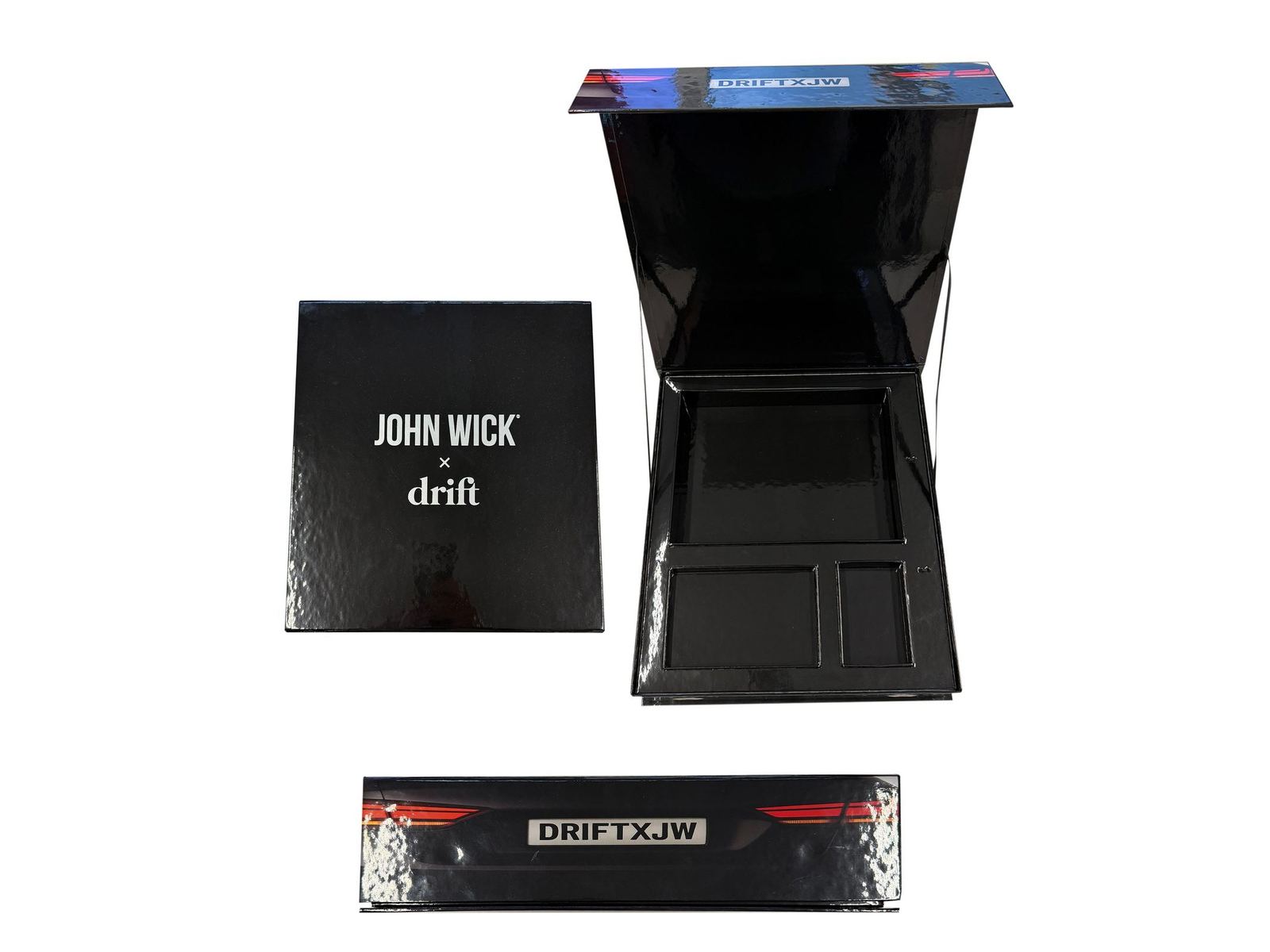
Rigid boxes are the standard for premium and luxury footwear. Built around a solid chipboard core wrapped in printed or specialty paper, they hold their shape under stacking weight and read as substantial the moment a customer lifts the lid. Brands above a certain price point default to rigid construction because that weight and resistance is part of what justifies the price.
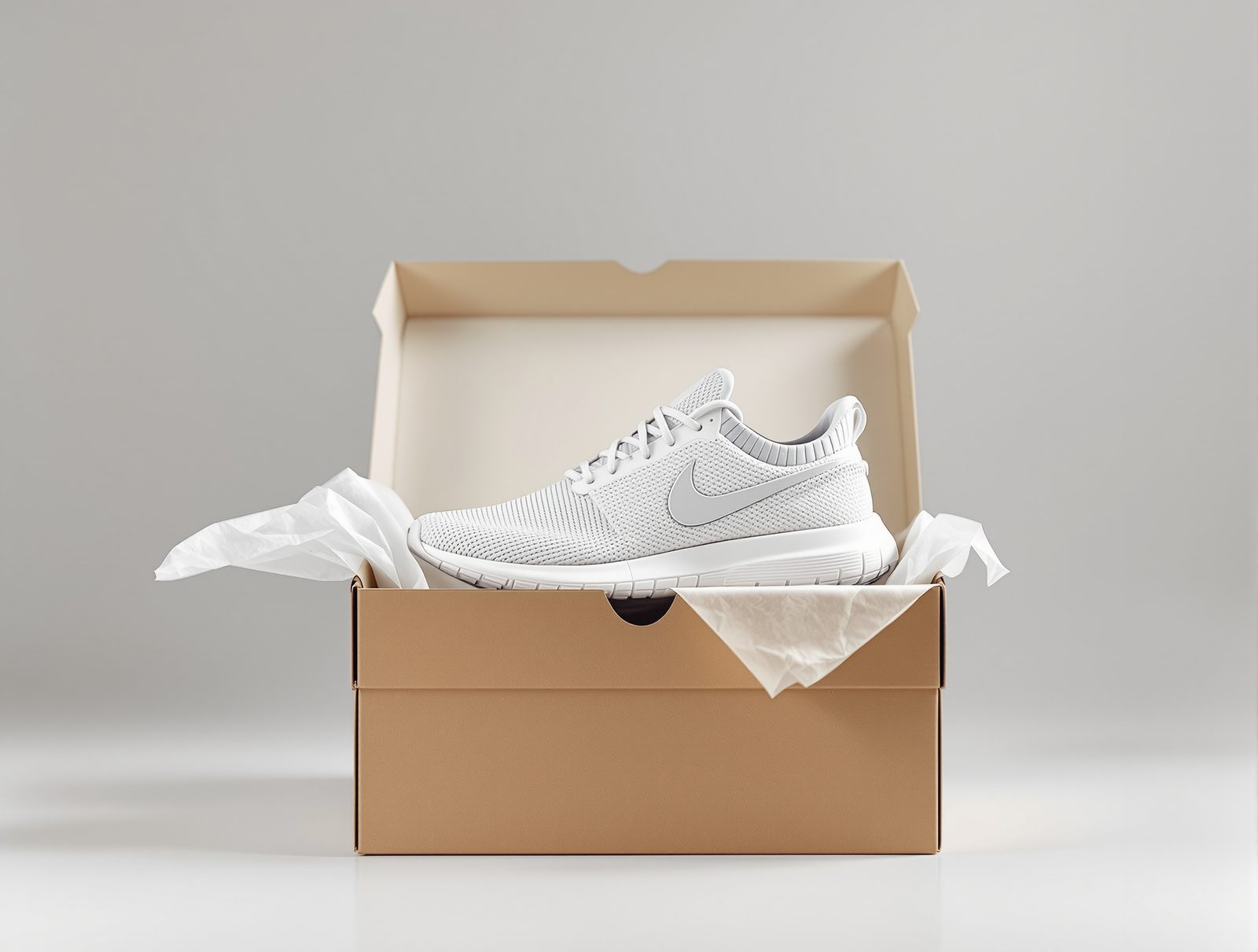
Folding cartons are the workhorse of mid-market and mass footwear — the familiar telescoping or hinged-lid shoebox most people picture. They ship flat, assemble fast on a packing line, and cost a fraction of rigid construction per unit, which makes them the right call for brands running higher volume on tighter margins.
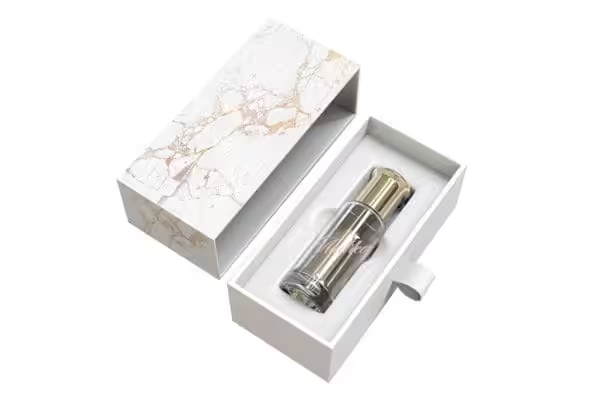
Telescope boxes — a base and a separate lid that slides down over it — appear in both rigid and folding formats. The two-piece construction gives a little more flex on fit than a one-piece hinged box, which helps when a single box size needs to cover slight variation across a shoe run.
Shoulder boxes sit between the two: a telescoping lid with a shortened base wall, so the lid overlaps less and the box uses less material while still keeping that lift-the-lid presentation. If you're weighing telescope against a lower-material alternative, we can help with shoulder boxes as well — a good fit for brands chasing a sustainability or cost target without giving up the premium unboxing motion.
Direct-to-consumer footwear brands live and die by the unboxing moment. When a customer buys online, the box arrives before they've ever touched the shoe, so it's carrying the brand's entire physical first impression. We work with footwear brands on interior treatments — printed tissue, ribbon pulls, foam inserts that cradle the shoe, printed lid interiors — that turn a functional container into something worth photographing. That's not decoration for its own sake; unboxing content is a real acquisition channel for DTC footwear, and a box that photographs well gets shared. That's the unboxing experience footwear brands now design for on purpose — the same shoe packaging discipline whether the box ends up on a shelf or a doorstep.
Shoe boxes fail for one of two reasons: the fit is off, or the box can't survive the trip. Custom shoe boxes solve the first by sizing to the actual shoe run instead of a generic size chart, and heavier board at the corners, a snug lid, and reinforced stacking strength solve the second. These aren't packaging boxes with a logo dropped on them — cardboard shoe boxes and rigid presentation builds alike get engineered around the specific silhouette, whether that's a low sneaker or a tall boot shaft. Some brands add die-cut windows so a customer can see the shoe before opening the lid, which turns a stockroom box into part of the unboxing experience on a retail counter as much as at a doorstep. Custom boxes at this level also mean matching foil stamping and finishing to the rest of a brand's shoe packaging, not treating the shoe box as an afterthought once the hangtags and mailers are already designed.
Shoe box packaging takes more physical abuse than most packaging categories. A pair of boots or sneakers is heavy relative to its footprint, boxes stack deep in stockrooms, and returns handling means many boxes get opened, closed, and reshipped more than once. We spec board weight and coating to the product — heavier double-wall or higher-caliper chipboard for boots and heavier athletic shoes, lighter stock where price point demands it — and test compression and hinge durability before a design goes into production, not after the first complaint. Whether it's cardboard shoe boxes shipping flat by the thousand or rigid builds made one line at a time, everything goes through the same board and coating review before a design is approved.
The two channels want different things from a box. Retail packaging has to perform in a shelf environment: consistent sizing so boxes stack evenly, graphics that read at a glance, and construction sturdy enough to survive being picked up and put back a dozen times before it sells. E-commerce packaging is judged differently — it needs to survive a parcel network on its own, since there's often no outer carton, and it needs to deliver the unboxing moment directly, since no store environment is doing that work. Many footwear brands run two versions of the same box for this reason: a retail-ready SKU and a shipping-hardened version for direct orders. Many brands add custom shipping boxes to complete the set, wrapping around the shoe box for transit so the inner box arrives pristine.
Footwear packaging is a printing showcase as much as a structural one, carrying as much brand signal as the shoe itself: full-coverage graphics, spot gloss or matte varnish, foil stamping on a logo, debossing on a lid. We handle design in-house and specify the print ourselves, which lets us match Pantone colors consistently across production runs and turn proofs around fast when a brand is finalizing artwork against a launch date.
What's the difference between a rigid shoe box and a folding shoe box? A rigid box is built around a solid chipboard core that holds its shape permanently; a folding carton ships flat and assembles on the packing line. Rigid costs more per unit but reads as premium; folding is faster and cheaper at volume, which is why most mass-market shoe boxes use it.
Can you match my existing shoe box size and just update the branding? Yes. Send us a sample box or your current die line and we'll match the dimensions and produce new artwork, or adjust the construction if the current box isn't performing well in shipping or on shelf.
Do you produce both the shoe box and the shipping carton around it? We do, both under one program — useful for footwear specifically, since the inner box and outer carton usually need to be dimensioned together so the pair doesn't shift in transit.
Do you offer custom boxes for both cardboard shoe boxes and rigid presentation lines? Yes. Custom boxes range from cardboard shoe boxes for mass-market volume to rigid presentation boxes for premium lines, and custom shoe packaging in either direction goes through the same prototyping process.
Whether you're launching a new footwear line or updating an existing one, we prototype in-house in New York and can take a design from sketch to production run in one process. From shoe boxes to full shoe packaging programs and the cartons that ship them, it's one process start to finish.
Considerations
Related Industries
Tell us the product, the channel, and the quantity — we'll map boxes, bags, and mailers to one program.