Industry
Custom electronics packaging manufactured in New York City, from first prototype through full production runs — built to keep static-sensitive circuitry safe, cushion components that cost more per ounce than almost anything else in a parcel network, and still deliver the unboxing premium brands are judged on.
What This Industry Runs

A phone, a smart speaker, a set of wireless earbuds — the box each one ships in has to do more work than packaging for almost any other product category. It has to keep static-sensitive circuitry from getting fried before the customer ever powers the device on, cushion a high-value component that costs more per ounce than nearly anything else moving through a parcel network, and still deliver an unboxing moment premium electronics brands are judged on. We manufacture custom electronics packaging in New York City, from first prototype through full production runs, which lets us solve those three problems together instead of splitting structural engineering and branding across separate vendors. That process carries across electronic devices of every size, from a single accessory to a full consumer electronics line, because the question never changes: what protection the product needs, and which packaging materials and box types actually deliver it.
Electronics packaging covers a wide range, since "electronics" spans everything from a bare chip to a finished consumer electronics product on a shelf. We build the packaging around electronic components at every stage: semiconductors and ceramic packages before they're mounted, boards that already carry a conformal coating, and complete electronic systems assembled and ready to ship. At the component level that means trays cut from anti-static foam and sized to a single part; at the assembly level, inserts that hold a populated board in place; at the finished-product level, the retail presentation a consumer electronics brand needs across every device type it sells.
As component design pushes toward more advanced packaging at the chip level — a discipline that happens well upstream of us — the box around it still has to solve the same problem: hold the part in materials suited to it, keep environmental factors like humidity and vibration from reaching it, and protect a component that often costs more than the box itself. That's why the same New York line can build a cavity insert for a single electronic component and the shelf-ready carton for the finished electronic product it ends up inside, on runs that are high volume or short.
Electronics packaging for delicate internals starts with the insert, not the outer box. Circuit boards, screens, and battery packs don't tolerate movement. We build custom inserts — die-cut foam, molded pulp, corrugated dividers — that cradle a device in a fixed position so it can't shift, rattle, or knock against the box wall during handling. For products with multiple components (a console and its controllers, a camera and its lenses), modular insert systems keep each piece in its own cavity while still nesting into a single carton, which matters as much for retail presentation as it does for shipping protection. The same logic applies at the component level: a bare chip or ceramic package needs a different cavity than an assembled device with a battery and screen in place, so the insert and the material both get chosen against the part.
Electrostatic discharge is invisible, and it's one of the most common causes of dead-on-arrival electronics. We spec conductive and static-dissipative materials — foams and bags rated to bleed off static charge rather than let it build against a sensitive component — for any electronics packaging that touches bare circuit boards, semiconductors, or other ESD-sensitive parts. Where electromagnetic interference is the concern rather than static charge itself, we can build in shielding to cut down on exposure during storage and transit. Static discharge is only one of several environmental factors that threaten electronic systems in transit — humidity, temperature swings, and vibration all play a part, which is why packaging material choices account for more than electrostatic discharge alone.
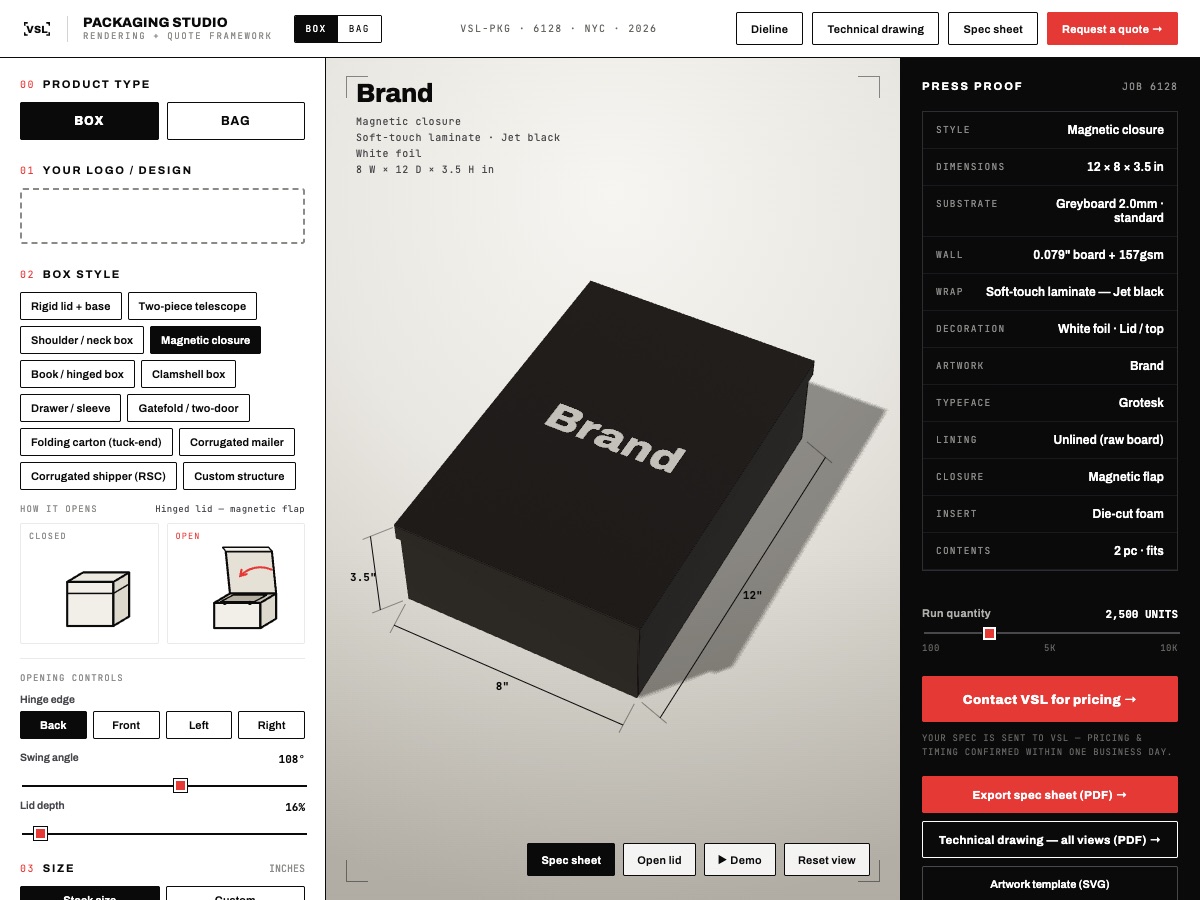
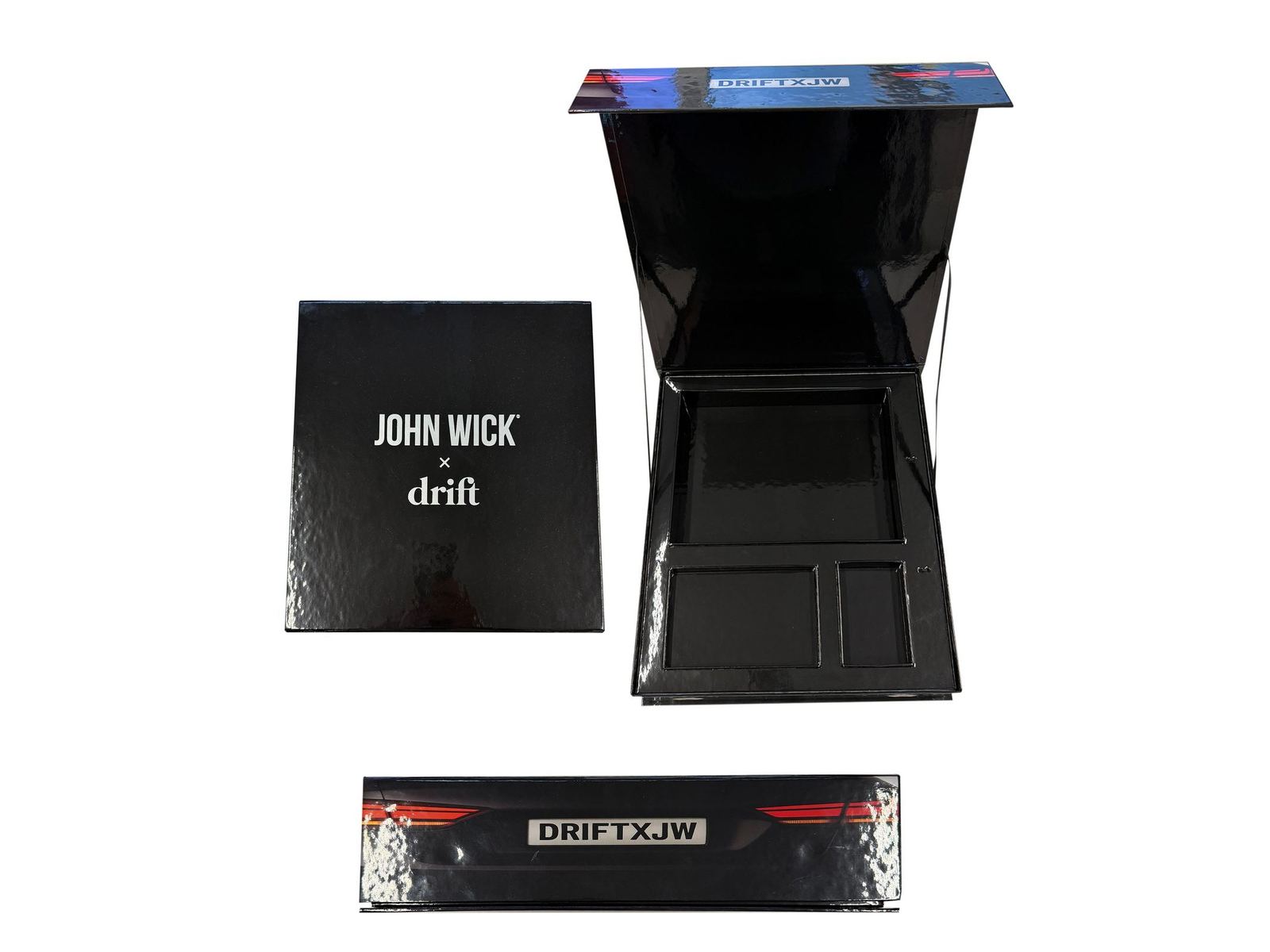
Electronics packaging aimed at flagship devices has to double as marketing: the box is part of the product experience, not an afterthought. Rigid construction is the standard here — a solid chipboard core wrapped in printed or specialty paper that holds its shape and adds perceived weight the moment a customer lifts the lid. We build rigid chipboard boxes with magnetic closures, foil-stamped logos, and debossed detailing for brands positioning a luxury electronic product box as part of the launch, and we prototype the unboxing sequence — lid resistance, insert reveal, tray placement — before committing to a production run. Device type changes the playbook: a high-end wearable and a full-size console don't share box geometry, insert layout, or packaging materials, so we design each run around the specific product.
Electronics packaging almost always needs two different jobs done by two different boxes. A retail box has to perform on a shelf: consistent sizing, shelf-ready graphics, and construction that survives being picked up and set back down repeatedly before it sells. If a retail-facing device box needs to hold up under lighter volume without the cost of rigid construction, custom folding cartons are usually the right call — they ship flat, assemble fast, and still take full-coverage print well. The shipping side of the equation is a separate problem: an outer carton has to survive a parcel network on its own, which is why we bring the same attention to corrugated boxes, spec'd with moisture resistance and compression strength to protect the retail box — and the device inside it — from dock to doorstep. Many electronics brands run both formats off a single product packaging line dimensioned to nest cleanly inside a shipping carton, so nothing shifts between the two. The right split often comes down to product type and order volume: accessory-heavy electronic products with several SKUs in one shipment tend toward corrugated multipacks, while a single electronic device ships better in its own retail box.
Electronics packaging carries more regulatory weight than most categories. We produce to RoHS compliance and correct labeling requirements, and we work in FSC-certified paperboard along with biodegradable and recyclable materials where a brand wants its packaging footprint to match its sustainability claims. None of that is optional for electronics work — a mislabeled carton or a non-compliant material can hold a shipment at a distribution center regardless of how good the box looks. Material type gets specified alongside the compliance paperwork from the start, for the same reason — a board that fails on humidity at the dock stops a shipment just as effectively as a mislabeled carton does.
What is ESD protection and why does electronics packaging need it? ESD (electrostatic discharge) protection uses conductive or static-dissipative materials to bleed off static electricity before it reaches a sensitive component. Without it, static buildup during handling can silently damage circuit boards and semiconductors, showing up later as a dead-on-arrival return.
What's the difference between retail electronics packaging and a shipping box? Retail packaging is built to sell — sized and printed to perform on a shelf and survive repeated handling before purchase. A shipping box is built to protect the retail package, and the device inside it, through a parcel network, with a focus on compression strength and moisture resistance rather than shelf graphics.
Can you build a luxury electronic product box for a premium device launch? Yes. We prototype rigid construction, closures, and interior treatments in-house before committing to a production run, so a brand can test the full unboxing sequence — not just see a rendering — before the launch date is locked.
Do you package electronic components as well as finished devices? Yes. We build packaging for the full range — bare electronic components and chip-level parts that need anti-static foam trays, electronic systems mid-assembly, and finished consumer electronics ready for retail. Insert type, material, and box design change at each stage; the goal doesn't, which is to protect what's inside without over-building around it.
Whether you're packaging a single flagship device, a full consumer electronics line, or electronic components still headed for final assembly, we prototype electronics packaging in-house in New York and produce it to that spec, from first sample to full run.

Considerations
Related Industries
Tell us the product, the channel, and the quantity — we'll map boxes, bags, and mailers to one program.