Abilities
Packaging Proofs
The last checkpoint before your job goes on press: confirming that color, layout, and finish match what you approved on your actual substrate, not on a screen.
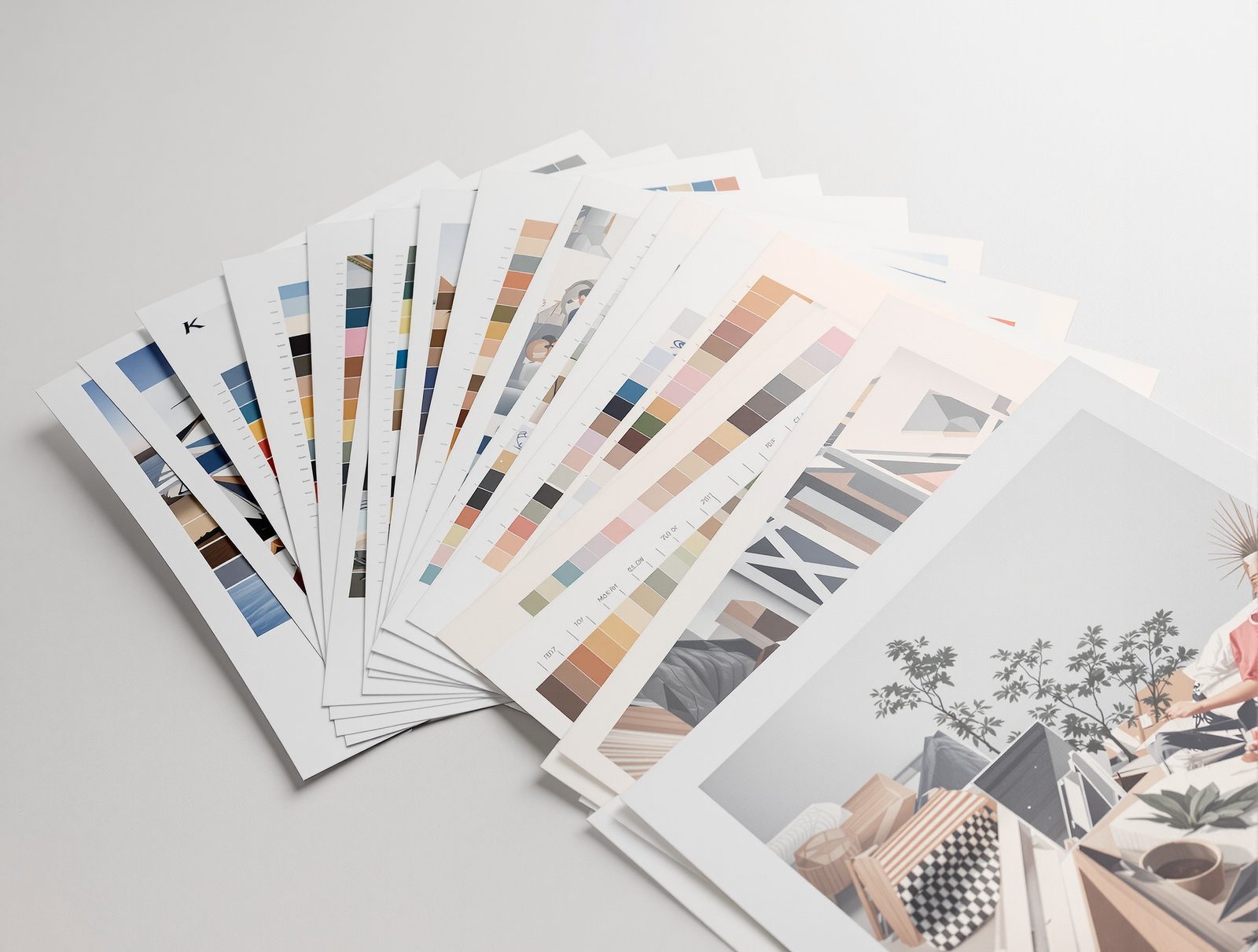

A packaging proof is the last checkpoint before your job goes on press: the point where you confirm the color, the layout, and the finish actually match what you approved, not what a screen happened to render that morning. As an NYC packaging manufacturer that designs, prototypes, and prints, we treat packaging proofing as a required production stage, not a courtesy step you can skip to save a day. Color that looks correct in packaging artwork on a screen can still drift once it hits your actual substrate, and printing proofs are the only reliable way to catch that drift — and confirm color accuracy — before we commit a full run to press.
PDF Proofs, Digital Proofs, and Press Proofs
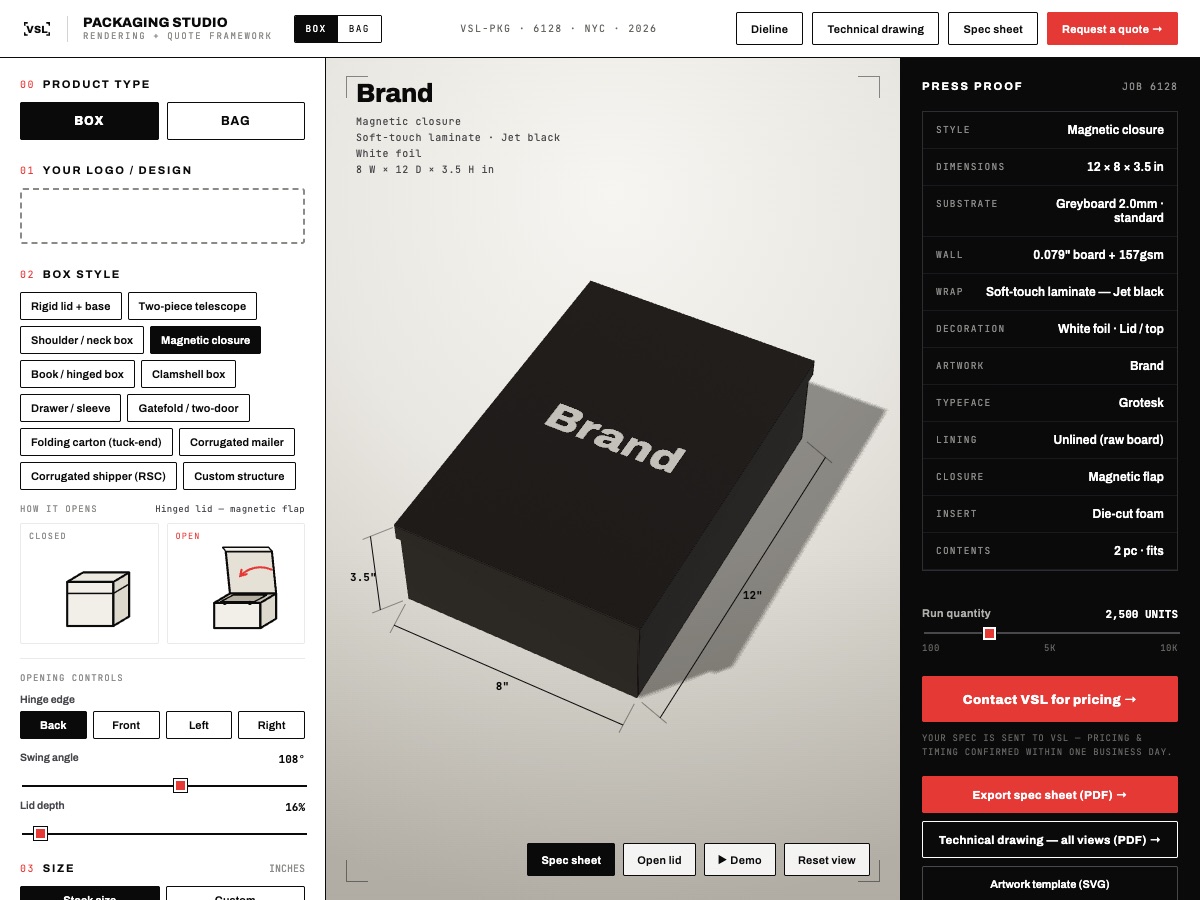
Packaging proofs run in three stages, and mixing them up is where most color surprises come from. The fastest is a PDF proof: a soft-proof file of your packaging artwork you review on screen before anything physical gets printed, useful for catching layout, copy, and bleed errors within hours rather than days. Where a 3D rendering shows you a photorealistic mockup before anything is printed, a digital proof is a step further — an actual high-resolution printout from a calibrated proofing printer — fast to produce, useful for checking layout, copy, bleed, and rough color, and typically ready within a day. It's a strong stand-in for color, but it isn't printed with the same inks, plates, or press as your production run, so it can't guarantee an exact match. A press proof is different: it's a printed press proof, a short run on the actual production press, using the actual inks and the actual substrate specified for your job. It costs more and takes longer to schedule, but it's the only proof that shows you precisely what will come off the line.
Color Matching: CMYK vs. Pantone
Most packaging color problems trace back to which color system a job is built on. CMYK is a four-color process — cyan, magenta, yellow, and black laid down as tiny dots that blend to the eye — and it's well suited to photography, gradients, and full-color artwork, though the exact build can shift slightly from run to run. Pantone is a spot-color system: a specific ink, premixed to a numbered standard, rather than a dot pattern approximating a color. Brand logos and solid background colors usually call for Pantone, since a CMYK build can read close but rarely identical across print jobs. Printing proofs are where we confirm which system your job runs on and whether the result hits the Pantone number or CMYK build you specified, within an acceptable tolerance.
Keeping Proof and Production in Sync
A proof only earns its keep if the production run actually matches it. Once you sign off on a proof, that approved proof becomes the reference standard the press run is held to for the full order — same file, same ink formulation, same substrate, carried forward rather than reinterpreted. It's the same logic behind a hand-built prototype: a prototype confirms structure holds up before a production run starts, and a proof confirms color and print quality will, too. Skipping that continuity is how a brand ends up with a first proof that looked perfect and a production run that didn't match it — which is exactly the gap printing proofs exist to close.
When to Order Which Proof
A PDF proof is usually enough for a quick copy check with no color at stake. A digital proof is the right call for internal layout review, a reprint of a job you've run before, or a copy change on artwork whose color has already been locked. A press proof earns the extra time and cost when you're running a brand-critical Pantone match for the first time, committing a large volume of material to a new design, or specifying a finish — spot UV over a dark substrate, for instance — that a digital printer simply can't reproduce accurately. Most of our packaging proofs work this way: PDF and digital proofs handle the majority of reorders and layout checks, while press proofs are reserved for the jobs that can't risk a mismatch. If you're not sure which one your job needs, send us your files and request a quote; we'll tell you before you commit to either.
Packaging Proofs FAQs
What's the real difference between a digital proof and a press proof? A digital proof is printed on a proofing printer and shows you layout and approximate color quickly. A press proof — a printed press proof — runs on the actual production press with your actual inks and substrate, so it shows you exactly what your finished packaging will look like. Digital is faster and cheaper; press is more accurate.
How do you match Pantone colors on custom packaging? We start from the Pantone number you specify, mix or select the corresponding ink, and print a proof so you can confirm it against your standard before the full run. Because Pantone is a premixed spot color rather than a CMYK build, it holds consistent from proof to production in a way process color sometimes can't.
Do I need a proof for every production run? Not always. A repeat order with no design or color changes usually doesn't need a new proof. Anything new — new artwork, a new substrate, a new finish, or your first run of a design — should go through a proof first, since that's the cheapest point in the process to catch a color or layout problem.
Start the Conversation
Tell us the product and where it is headed — we will scope the work before anything goes to press.