education guide
What Is Packaging Design?
Packaging design is structure, materials, and graphics engineered together — how the two disciplines split, how a project runs, and what makes one effective.
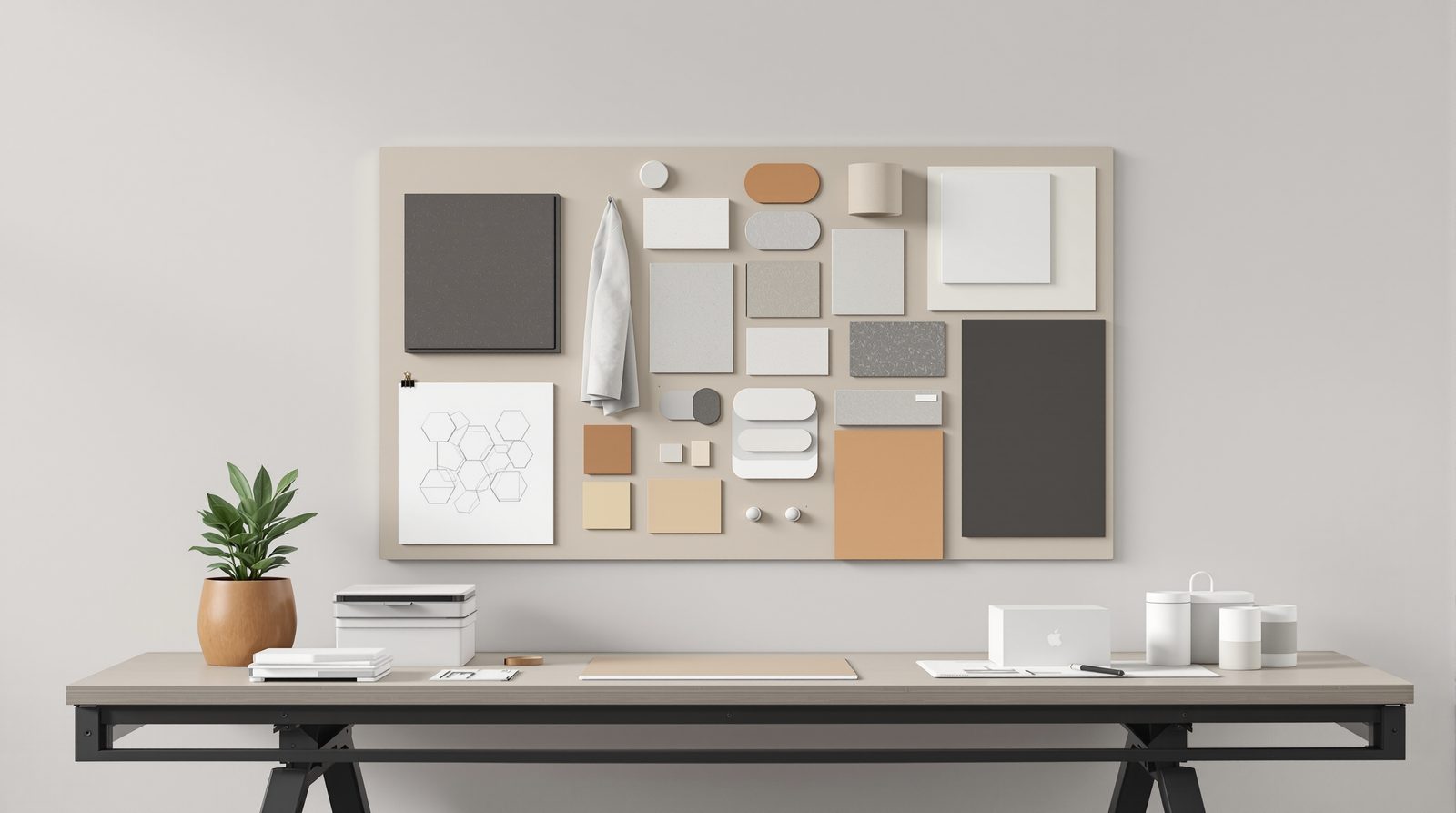
Packaging design is the process of engineering a product's container — its structure, materials, and graphics — so it protects what's inside, moves efficiently through production and shipping, and communicates the brand the instant someone sees it. It's really two connected disciplines working on the same object: structural design, which determines how the box or bag is built, and graphic design, which determines how it looks. Done well, packaging design isn't decoration added to a box after the fact — it's engineered into the box from the first sketch. In practice, to design packaging well means treating brand identity as a structural input, not a coat of paint applied at the end.
That distinction matters more than most people expect, and it's where a lot of packaging projects go sideways. Understanding packaging design at a practical level starts with that split, moves through the design process stage by stage, and ends with what actually makes a finished piece effective.
Structural Design vs. Graphic Design: Two Different Jobs
Structural design is engineering. It sets the panel dimensions, fold lines, locking tabs, wall thickness, and how the finished piece nests for shipping. This work lives on a dieline — the flat, cut-and-fold pattern that becomes a three-dimensional box or bag once it's scored and folded. Get the structural side wrong and no amount of good artwork saves it: the box won't stay closed, won't survive a drop, or won't fit efficiently on a pallet.
Graphic design is the layer most people picture first — logo placement, color, typography, and finishing like foil or embossing. But it isn't separate from the structure; it's applied to it. A foil stamp has to account for the panel it sits on, the substrate underneath, and how the piece gets handled on a shelf or unboxed on camera. The strongest packaging design work runs structural and graphic decisions in parallel, not as a design handoff followed by a separate "make it pretty" pass.
The design tools differ by discipline but stay connected through the same file: structural work is built in CAD or vector software against real dimensions, while graphic work layers artwork onto that same dieline in Adobe Illustrator or similar. Keeping both in one file is what lets early design concepts survive contact with an actual press run instead of falling apart the moment tolerances get involved.
The Design Process: Brief to Production
Whether you design packaging in-house or brief an outside team, a project generally moves through five stages, each one narrowing the risk before real money gets spent on tooling and material:
- Brief. SKU dimensions, shipping method, budget, timeline, and brand guidelines get nailed down before anyone opens a design file.
- Dieline. The structural template gets built and tested on paper — read what a dieline is for the mechanics if you haven't seen one.
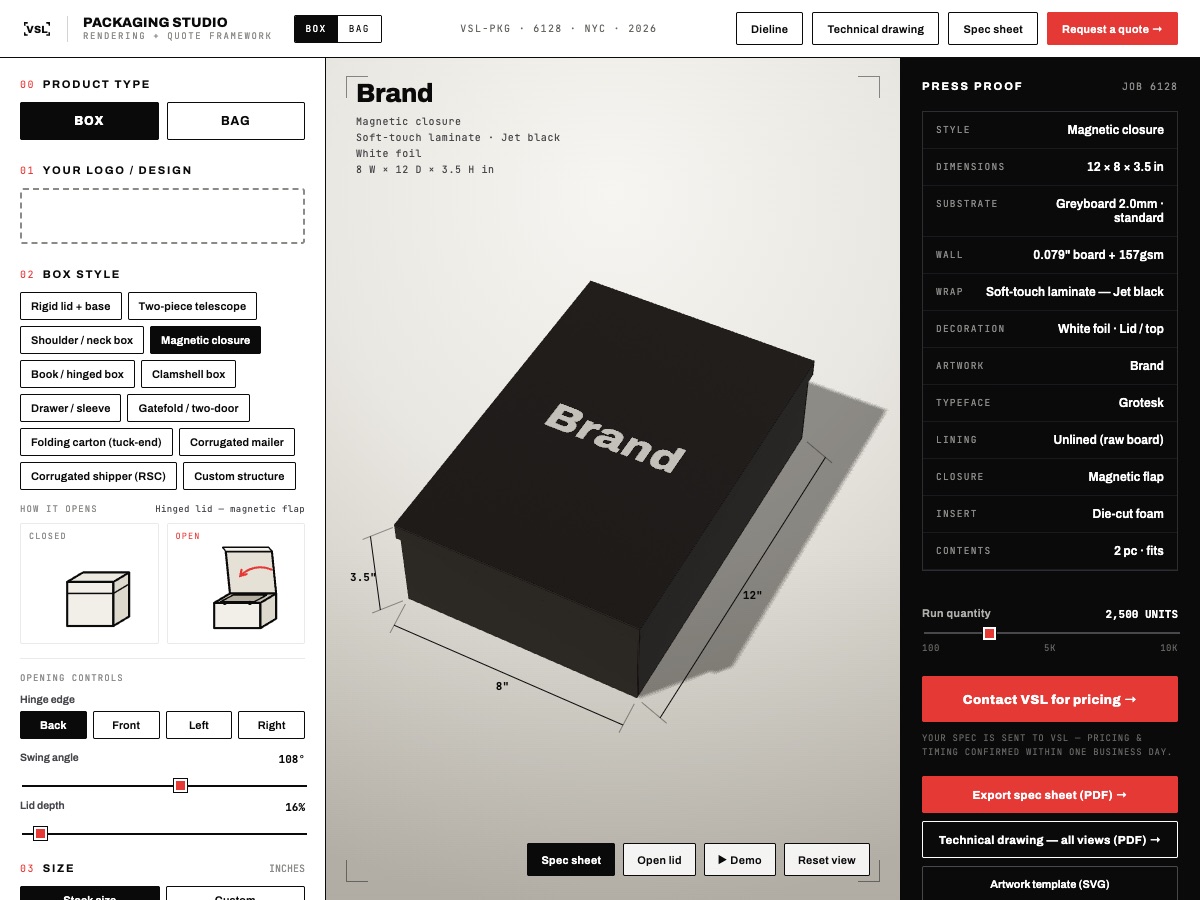
- Render. Artwork gets wrapped around a 3D model of the actual dieline, producing a photorealistic render you can review before a single sheet is cut.
- Prototype. A hand-built sample confirms the design folds, closes, and holds up the way the render implied — physical prototypes catch structural problems a screen never will.
- Production. Color and die-cutting get locked with production proofs before the full run starts, because a mistake caught here costs a day and a mistake caught after 10,000 units costs the run. This is also the stage where the team has to create print-ready files — outlined type, correct color mode, bleed and safety confirmed — since a proof approved on screen still has to survive the actual press.
Skipping a stage doesn't save time — it just moves the cost of finding a mistake later, when it's more expensive to fix.
What Makes Packaging Design Effective
Effective packaging doesn't happen by accident — the design earns its keep in three places:
Shelf impact. A shopper's eye moves fast — silhouette and color contrast do more work than fine print in the two or three seconds it takes to scan a shelf. Design that reads clearly at a glance, before anyone picks it up, is doing its job.
Unboxing. For e-commerce and DTC brands especially, the reveal is part of the marketing. Insert placement, tissue, the order a product is uncovered — these are design decisions, not afterthoughts, and they show up in customer photos and video whether or not that was the plan.
Cost and manufacturability (DFM). A design that looks flawless on screen but ignores material yield, ink coverage, tolerances, or press speed can quietly double the per-unit cost or introduce a die-cut detail a press can't hold in register run after run. Design for manufacture means building those constraints in from day one instead of value-engineering the design after it's already approved.
The Essential Elements of Effective Packaging Design
Strip away the specifics of any given project and the essential elements repeat across almost every packaging design brief: structure, material, color, typography, and finishing. Each of those design elements has to answer to the same source — brand identity — because a box or bag that looks generic on shelf fails at its main job regardless of how well it's built.
Brand identity is the visual and structural shorthand consumers use to recognize a product before they read a word on it — silhouette, color palette, and material choice all carry brand identity whether or not there's a logo in view. Brand personality shows up in the details underneath that shorthand: a playful brand reads through rounded corners and saturated color, a premium one through matte finishes, minimal copy, and tighter tolerances. Brand values are the hardest to see and the easiest to get wrong — a brand built around sustainability claims that ships in excess void-filled corrugated is telling consumers something the materials contradict.
Material choice increasingly has to balance shelf performance against eco-friendly packaging goals — recyclability, reduced material weight, mono-material construction — without sacrificing structural integrity, and that trade-off is itself one of the essential elements a design brief needs to settle early rather than after tooling is cut.
Hiring a Designer vs. Using a Manufacturer's In-House Team
A freelance designer or branding agency is often the right call for a pure creative refresh — new artwork on packaging whose structure isn't changing. They're skilled at identity work, and if the dieline stays the same, there's little structural risk to manage. Even then, it helps to loop in whoever owns the structural design elements, since finishing choices like foil or emboss still have to register against the panel underneath — and that panel is where brand identity actually lives, not just the artwork sitting on top of it.
The calculation changes once the project involves a new structure, a new SKU, or a tight production timeline. A designer working outside a factory has to guess at tolerances, substrate behavior, and press limitations, then hand the file to a manufacturer who may send it back with changes — a slower and pricier loop than doing the work where it gets built. That's the point to bring in our packaging design services instead: design done alongside the people running the dielines, renders, and prototypes, so structural and graphic decisions get resolved once rather than bounced between two vendors. Keeping the whole design process with one team is what makes that resolution possible in the first place.
What Is Packaging Design? Common Questions
Is packaging design the same as graphic design? No. Graphic design covers the artwork, color, and finishing applied to a package. Packaging design includes that, plus the structural engineering — the dieline, fold lines, and fit — that determines whether the package actually works before anyone sees the artwork on it.
How long does a packaging design project take? It depends on complexity, but most projects moving through brief, dieline, render, prototype, and production land somewhere between two and six weeks. A graphics-only update on an existing structure is much faster than a new custom dieline built from scratch.
What does DFM mean in packaging design? DFM stands for design for manufacturability — designing with production constraints (material yield, tolerances, press capability) factored in from the start, rather than discovering after approval that the design is expensive or difficult to actually produce.
Can I design packaging myself without a background in structural engineering? You can sketch a concept, but a workable dieline still needs someone who understands fold geometry, material behavior, and press tolerances — which is why most teams design packaging jointly: creative direction from the brand side, structural execution from the manufacturer.
How do I know if a design reflects my brand values? Check whether the structural choices — material weight, finish, how much void space ships with the product — actually match what your brand claims to stand for. Brand values that live only in a mission statement and not in the box itself are easy for consumers to spot.
That's the practical answer to what is packaging design — and it's also the shortest definition of effective packaging design: structure and graphics, engineered together from brief to production.