Boxes
Custom Food Packaging
Custom food packaging covers the boxes, cartons, and trays built specifically to hold, present, and ship food product — as opposed to a stock box pulled off a shelf and hoped to fit. We manufacture custom food packaging in New York City, working from the product's real dimensions, weight, and handling path rather than a generic size chart. Bakeries, confectioners, CPG brands, and restaurant groups come to us for custom food boxes and design support when a standard mailer or shipping case doesn't hold shape, doesn't show product, or doesn't survive a walk-in cooler — this page covers the board options, formats, and finishing choices that separate food packaging from general-purpose boxes.
Custom food packaging covers the boxes, cartons, and trays built specifically to hold, present, and ship food product — as opposed to a stock box pulled off a shelf and hoped to fit. We manufacture custom food packaging in New York City, working from the product's real dimensions, weight, and handling path rather than a generic size chart. Bakeries, confectioners, CPG brands, and restaurant groups come to us for custom food boxes and design support when a standard mailer or shipping case doesn't hold shape, doesn't show product, or doesn't survive a walk-in cooler — this page covers the board options, formats, and finishing choices that separate food packaging from general-purpose boxes.
Food-Grade Board and Coatings for Food Packaging Boxes
Food packaging starts with the board, and the board choice depends on whether the box touches food directly or holds a wrapped or bagged product. Direct food contact calls for food-grade board — typically a virgin or food-grade kraft or SBS stock, free of recycled fiber that could carry contaminants into the product. Indirect contact, where the food is bagged, wrapped, or boxed a second time before it reaches the carton, opens up standard recycled board as an option, which lowers cost without changing how the package performs. On top of board grade, we add coatings to match the job: poly or wax coatings resist grease and moisture for bakery and fried-food packaging, while a matte or gloss aqueous coating on the outside handles branding and print without affecting the food-contact surface.
Custom Food Boxes: Bakery, Confection, and CPG Formats
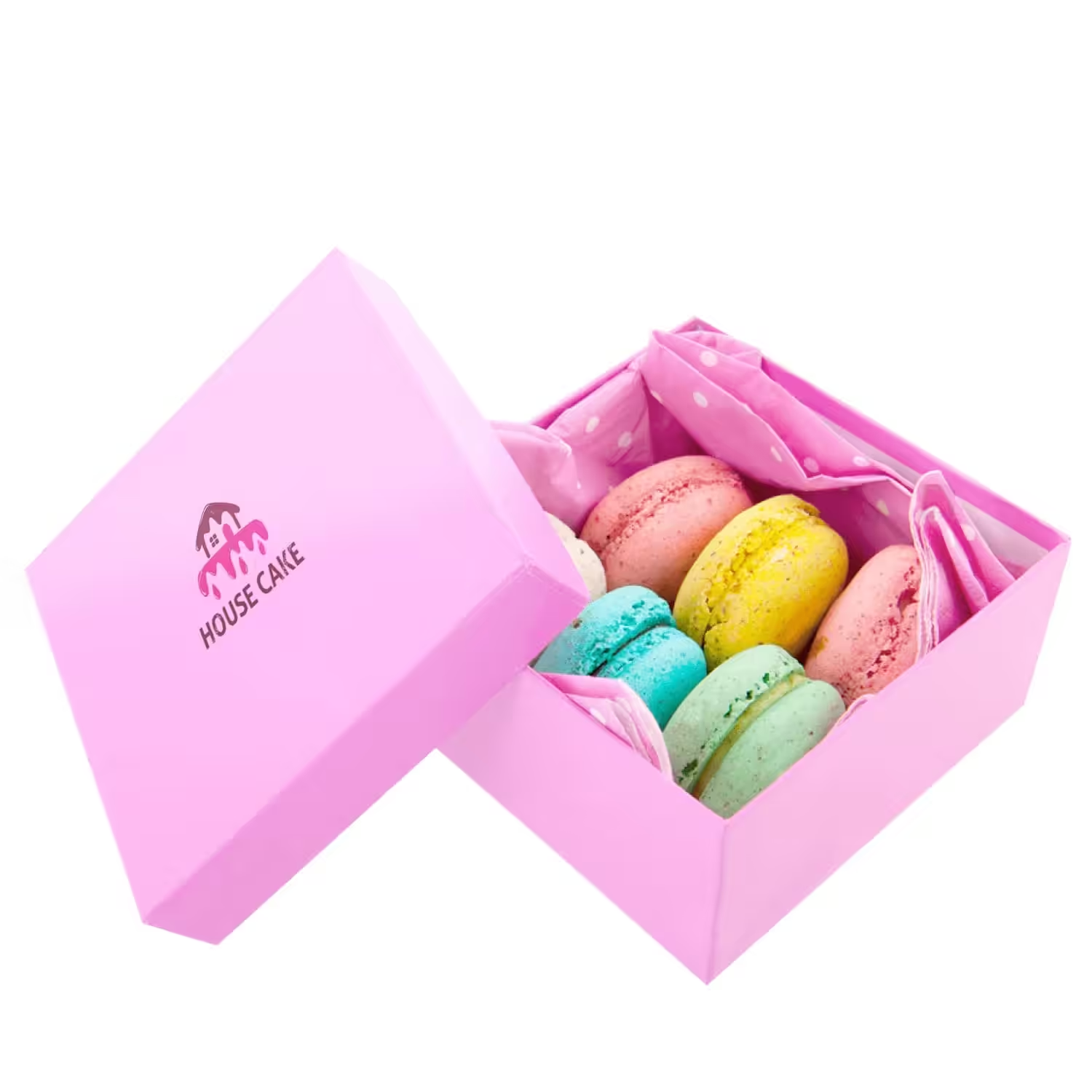
Bakery and confection accounts mostly order small-format cartons — cookie boxes, pastry boxes, and candy packaging that need to hold shape without crushing product stacked two or three high. For runs like these, most bakery and confection accounts order folding paperboard cartons, which fold flat for storage and pop into shape at the point of use, keeping labor low on the packing line. A window cutout is the most common upgrade we run on bakery cartons — a die-cut opening backed with clear film that shows the product through the box instead of relying on a printed photo, which matters when the product itself is the sell. CPG brands and food-service operators shipping heavier cases, like produce, prepared meals, or multi-pack snack boxes, often need more crush resistance than a folding carton alone provides; pairing the carton with a corrugated tray insert adds stacking strength for cases moving through a cooler or a delivery van without changing the retail presentation.
Coffee Shops, Restaurants, and Takeout Packaging
Coffee shops, restaurants, and quick-service kitchens order custom food packaging for a different reason than a CPG brand does: the box or carton has to survive being handled hot, carried, and opened one-handed, often within minutes of coming off the line. Custom printed takeout cartons and coffee cup carriers get the same food-grade board and grease-resistant coating treatment as a bakery box, just sized and scored for a faster pack-out. For coffee shops specifically, board material and coating matter as much as branding — a carrier that holds heat without going soft is doing its job before the logo on the side ever gets noticed. Restaurants running a full takeout and delivery program often standardize on one or two custom printed container formats across the menu — cartons, trays, or takeout containers — rather than a different box per dish, which keeps ordering simple and print costs predictable as volume scales.
If your program also includes custom bags, food labels, or other food packaging supplies from a separate vendor, tell us what's already spec'd so the boxes and cartons we build match it on color and stock.
Grease Resistance and Freezer-to-Shelf Packaging
Food packaging that travels from a freezer to a store shelf has to survive condensation without the box going soft, printing bleeding, or a grease-resistant liner failing at the seams. We spec liner coatings and board caliper against the actual cold-chain path — a box that only sees refrigeration for a day needs less protection than one that's frozen, thawed, and displayed at retail temperature. Grease-resistant coatings matter just as much outside the freezer case: bakery, deli, and prepared-food cartons need a liner that keeps oil from wicking through the board and staining the outside graphics before the box ever reaches a customer.
Food Packaging Printing and Brand Unboxing
Food packaging printing is where a box stops being a container and starts being a marketing asset. We print directly on the board in flexo or litho-laminate rather than applying a paper label, so the graphics survive handling and don't peel in a humid kitchen or walk-in cooler. Food and CPG brands lean on this for shelf standout, brand recognition, and for the unboxing moment itself — a printed interior, a branded tissue insert, or a matte finish on the exterior all read as intentional rather than generic, which matters for direct-to-consumer food brands competing for attention in a delivery box. For a broader look at how we support restaurant groups, CPG brands, and specialty food accounts beyond boxes and cartons, see our work with food and beverage brands.
Prototyping and Wholesale Food Packaging Runs
Every custom food packaging order starts as a physical trial build before it goes to press — we cut a sample from your real product dimensions so you can check window placement, liner performance, and stacking before committing to a wholesale run. Minimums and lead times shift with board grade and finishing: a single-color kraft bakery box moves through production faster than a full-coverage litho-laminate CPG carton with a window cutout, so it's worth flagging print and coating needs early in the quote process. Contact us with your product dimensions, expected order volume, and cold-chain path, and we'll spec the board, coating, and format for your custom food packaging before your first run goes to press.
Custom Food Packaging FAQ
What's the difference between food-grade board and standard board? Food-grade board is used when the package touches food directly — it's produced without recycled fiber that could carry contaminants into the product. If the food is bagged or wrapped before it goes into the box, that's indirect contact, and standard board is generally an acceptable, lower-cost option.
Can custom food packaging include a window cutout? Yes. A die-cut window backed with clear film is the most common upgrade on bakery and confection cartons, letting the product itself sell the package instead of relying only on printed graphics.
Can you produce custom food boxes for a small brand's first run? Yes — we scope food packaging boxes per project rather than off a fixed minimum. Board grade and finishing move the number more than quantity alone does, so a single-color kraft bakery box and a litho-laminate carton with a window cutout quote differently at the same volume. Send your dimensions and target quantity and we'll come back with a minimum specific to that spec.
How do you handle grease resistance and cold storage in food packaging? We spec liner coatings and board caliper against the product's actual path — poly or wax coatings hold up against grease and moisture for bakery and fried-food packaging, and heavier coatings apply when the box travels from freezer to retail shelf and has to survive condensation without softening or bleeding print.
Price Your Run
Product dimensions, quantity, and any finish ideas — we will quote structure, material, and print.