
Boxes
Tuck End Boxes
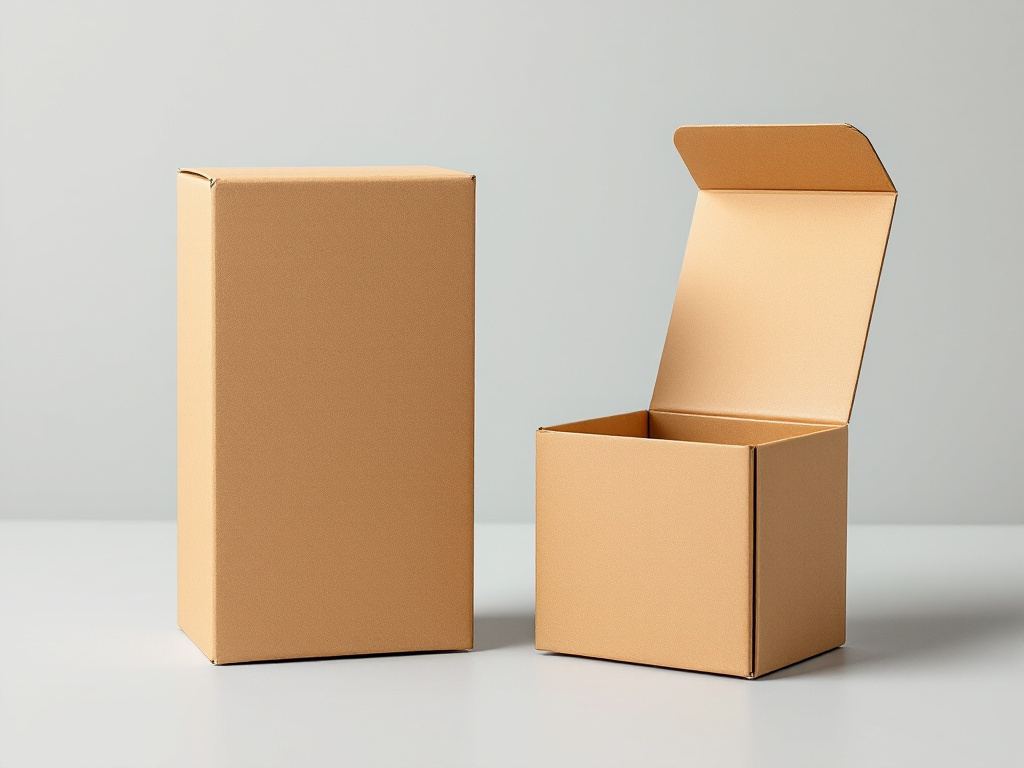
A paperboard carton that closes by folding flaps into slots cut along the side panels, locking shut on friction rather than tape or glue — designed, prototyped, and printed in New York City.
Constructions
Straight tuck end and reverse tuck end
Closure
Friction-fit flaps, opened and reclosed by hand
Board
SBS or clay-coated recycled paperboard
Caliper
14pt for small items up to 24pt or heavier
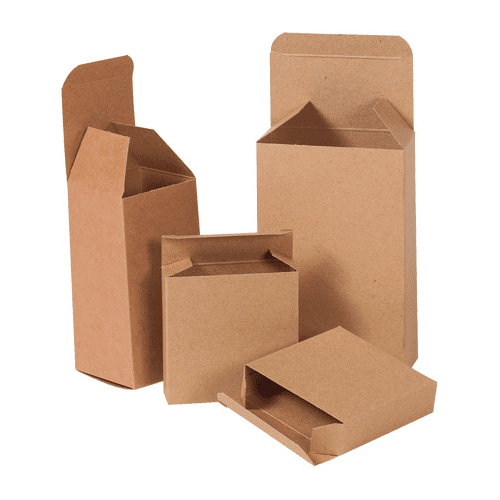
A tuck end box is a paperboard carton that closes by folding flaps into slots cut along the side panels, locking shut on friction rather than tape or glue. It's the construction behind most of what people picture when they hear "cardboard box" on a store shelf — cereal cartons, cosmetics packaging, supplement boxes, phone accessory cartons. The tuck-end family splits into two core constructions, straight tuck end and reverse tuck end, distinguished by which direction the top and bottom flaps fold. We design, prototype, and print tuck end boxes in New York City, from a single sample dieline through a full production run. Buyers often just call them tuck boxes for short, and we build custom tuck top and tuck-bottom flap combinations to whichever retail packaging spec the product needs.
Straight Tuck vs. Reverse Tuck: What Separates Them
Both styles start from the same basic carton blank — a folded paperboard tube with a glued side seam, plus tuck flaps at the top and bottom that fold in to close each end. The difference is in which way those flaps fold. On a straight tuck end (STE) box, the top and bottom flaps both tuck in from the same panel side, so the fold direction is identical at both ends. On a reverse tuck end (RTE) box, the flaps fold in opposite directions — the tuck-top flap tucks in from the front, the bottom from the back. That single construction choice changes how the carton opens, how graphics wrap the panel, and which format fits a given retail use case. We cover the straight tuck end construction in more depth on our straight tuck end boxes page.
Closure Mechanics: How a Tuck Flap Locks
A tuck flap works by friction, not adhesive — the flap is cut slightly wider than the slot it tucks into, so it holds shut under its own tension once folded in. That's what lets a customer open and reclose a tuck-end box repeatedly without tearing it, which matters for anything meant to be reused or resealed after the first open — a cosmetics carton going back in a bathroom cabinet, a supplement box staying on a shelf. The side seam, by contrast, is usually glued permanently during converting, so the only moving parts on the finished carton are the top and bottom tuck flaps.
Paperboard Grades and Structural Choices
Tuck end boxes are typically cut from solid bleached sulfate (SBS) or clay-coated recycled paperboard, in calipers running from a light 14pt for small items up to 24pt or heavier for cartons carrying more weight. Coatings get specced to the contents — gloss or matte lamination for a cosmetics box, a soft touch lamination upgrade where the box needs a premium hand-feel, or grease-resistant coating for food-adjacent packaging. We match board grade and caliper to what's actually going inside, rather than defaulting to one stock weight across every SKU.
Printing and Typical Uses
Because the front panel on a tuck end box is a clean, continuous print surface, it's a strong format for offset litho printing, foil stamping, and finishing carried across a full production run. That clean face is also where a brand's logo does the most work, which is why custom printed tuck panels get treated as prime retail packaging real estate rather than an afterthought. We build tuck end boxes most often for retail cartons — cosmetics, personal care, over-the-counter and supplement packaging, small electronics and accessories, and any small consumer good that needs a compact box a shopper can open, inspect, and close again on the shelf.
Tuck End vs. Seal End Boxes
Not every carton needs a reclosable flap. When a product runs through automated high-speed filling equipment, or needs a factory-sealed, tamper-evident close instead of a friction-fit flap, a seal end box is usually the better construction — the ends are glued shut during converting instead of left open for a customer-folded tuck. Roll end tuck boxes are a third option worth knowing about — they add a reinforced, double-wall base for heavier fills, which neither a straight tuck end nor a seal end box is built for. We build all of these formats and can help decide which closure fits the filling line and shelf use case.
Custom Sizing and In-House Prototyping
We size every tuck end box around the actual product going inside — send dimensions and we'll prototype a dieline sized for a snug fit rather than pulling from a generic size chart. For brands still comparing constructions, we can prototype more than one — a straight tuck, a reverse tuck, and a seal end box — so you can compare fold and finish by hand before locking in a spec. For projects that need more flexibility than the tuck-end family offers, our custom product boxes team can help scope a construction outside the standard tuck-end range.
Tuck End Boxes FAQ
What is a tuck end box? A tuck end box is a paperboard carton closed by folding flaps into slots along the side panels, holding shut on friction rather than tape or glue. It's the standard construction for retail cartons like cosmetics boxes, supplement packaging, and small consumer goods.
What's the difference between straight tuck end and reverse tuck end? On a straight tuck end (STE) box, the top and bottom flaps both fold in from the same panel side. On a reverse tuck end (RTE) box, the flaps fold in opposite directions — one from the front, one from the back. The choice affects how the front panel graphics read and how the carton opens.
Should I use a tuck end box or a seal end box? It depends on the closure and the filling line. Tuck end boxes are reclosable and assembled by folding flaps by hand or on a semi-automated line, which suits retail cartons a shopper reopens. Seal end boxes are glued shut during converting for a tamper-evident close and run more efficiently through automated high-speed filling equipment.
Whether you need a single prototype or a full wholesale run, we design and produce tuck end boxes in New York City, from first sample to production
Constructions & Use Cases
Ways We Build This Format
Price Your Run
Product dimensions, quantity, and any finish ideas — we will quote structure, material, and print.