
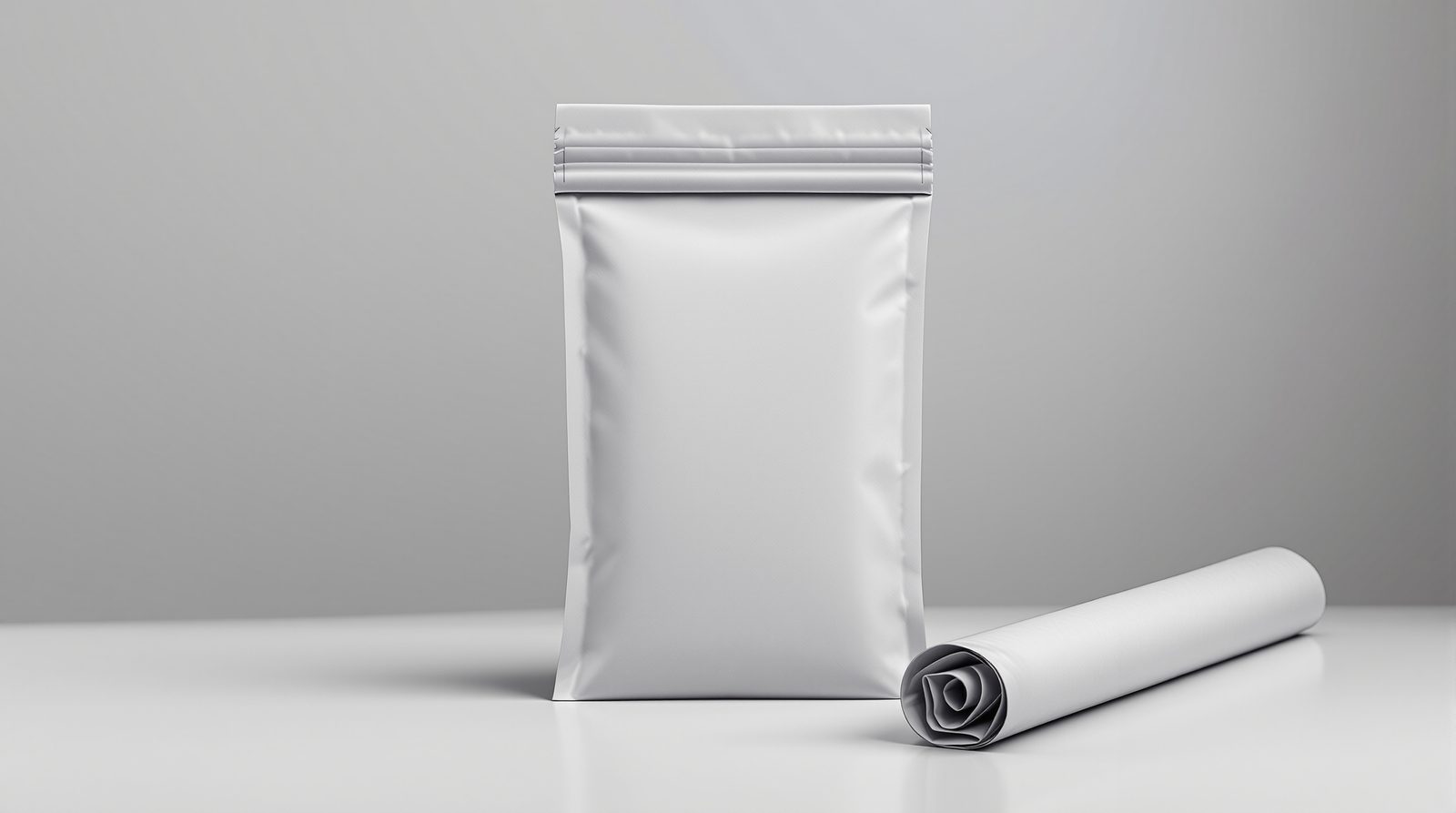
Recycled poly mailers are lightweight film envelopes with a self-seal strip, made with plastic that has already been through at least one life instead of being produced entirely from virgin resin. They are among the most common e-commerce shipping formats in circulation, and among the most argued about — praised for low shipping weight and criticized for what happens to them after delivery. Recycled mailers get pitched as an easy eco friendly upgrade; the reality is more specific than that.
Both positions are partly right. This is a format explainer rather than a sales pitch: what recycled poly mailers do well, where they genuinely fall short, and how they compare against a printed corrugated alternative for a branded shipping program.
What Recycled Poly Mailers Actually Are
The base material is polyethylene film, typically a low-density or linear low-density grade, extruded into a thin sheet and converted into a bag with a pressure-sensitive closure. "Recycled" describes the resin feedstock, not the construction — recycled poly mailers are built the same way a virgin one is, whether the finished product is a flat poly mailer or a cushioned bubble mailer.
That distinction matters because the recycled portion is almost never the whole bag. Films are usually blended, with recycled resin making up a share of the total and virgin resin supplying the tear strength and seal reliability the blend needs. A mailer described simply as "recycled" is telling you something happened, not how much — a spec sheet that says "100 recycled resin" is making a very different claim than one that just says "recycled," and the difference is worth reading closely.
Post-Consumer, Post-Industrial, and 100 Recycled Content Claims
The two feedstocks behave differently as environmental claims. Post-consumer resin was used, discarded, and recovered — it represents material genuinely diverted from a waste stream. Post-industrial resin is manufacturing scrap and trim recaptured before it ever reached a customer, which is good housekeeping but was never headed for a landfill in the first place.
Both are legitimate inputs. Only one of them supports the diversion story most brands intend to tell, so it is worth asking which one a quoted film contains rather than accepting "recycled content" as a single category — and whether the figure quoted is a partial blend or a genuine 100 recycled claim, sourced entirely from reclaimed resin. Recycled mailers of either type are a step up from virgin plastic, but they are not the same claim, and treating them as interchangeable is where most eco-friendly packaging language goes soft.
The Environmental Case for Poly: Weight and Volume
The strongest argument for poly mailers is straightforwardly physical. They weigh a fraction of what a rigid alternative weighs and take up almost no volume until a product is inside them.
That has downstream consequences across the whole chain. Lighter parcels mean lower dimensional weight, more units per truck, and less fuel burned moving packaging rather than product — a real, if modest, reduction in the carbon footprint of a shipping program. Flat film ships and stores in a fraction of the space of pre-formed boxes, which cuts inbound freight and warehouse footprint before a single order goes out. Adding recycled resin reduces the demand for new material on top of that.
For lightweight, non-fragile soft goods, this is a real advantage rather than a marketing one, and it is why apparel and accessory brands adopted poly mailers so widely as a default shipping format.
Planning a packaging run?
Get structure, materials, and finish quoted from your real quantities.
The Environmental Case Against Poly: End of Life
The weakness is disposal, and it is not a small one. Plastic film is generally not accepted in residential curbside recycling. It wraps around the rotating equipment at materials recovery facilities, which is why programs that accept rigid plastics still reject bags and films.
The route that does exist is store drop-off — the film collection bins at many grocery and retail chains. That stream is real and functional, but it requires a customer to accumulate film, remember it, and carry it somewhere, which most people do not do. Recycled poly mailers are therefore recyclable in a technical sense that rarely translates into being recycled, which is worth knowing before an "eco friendly" claim gets printed on the bag.
Two other complications are worth knowing. Adhesive labels, tape, and heavy ink coverage can contaminate a film stream. And "biodegradable" or "compostable" films are a separate category with separate requirements — many need commercial composting conditions that ordinary municipal systems do not provide, and they should not be dropped into a film-recycling bin, where they cause problems rather than solve them, no matter how eco friendly the label on the bag claims to be.
Recycled Poly Mailers Versus Corrugated Mailer Boxes
The honest comparison is not which format is more eco friendly in the abstract. It is which one fits the product, because a format that fails to protect what is inside it generates a return shipment, a replacement product, and a second round of packaging — which outweighs whatever was saved on the first, no matter how green the material was.
When a Mailer Box Is the Better Answer
A film envelope flexes with its contents and offers no crush resistance. Anything rigid, fragile, or breakable — glass, ceramics, electronics, cosmetics in rigid primary packaging — wants a structure that holds its own shape on a conveyor and under a stack.
That is what corrugated mailer boxes are for: a self-locking one-piece structure that ships without an outer carton, resists crushing, and gives a tamper-evident closure. Corrugated also has the disposal advantage poly does not — it is fully recyclable through the same curbside paper stream customers already use, with no special trip and no separate bin, which makes it the simpler format to describe honestly in a sustainability claim.
When Poly Still Makes Sense
For flat, soft, unbreakable goods — a folded garment, a textile accessory, a printed piece that mainly needs protection from rain — poly mailers are the lighter and lower-impact choice, and forcing that product into a box adds material and volume without adding protection. Recycled mailer bags cover most of that use case; padded and bubble mailers step in once the product can dent, scratch, or crack in transit. We run poly and padded formats alongside our paper and corrugated work, so the recommendation is not a foregone conclusion; our branded mailers page covers the full format range and how the material options compare.
Printing and Branding on Film Versus Board
Where the two formats diverge most sharply is as a branding surface. Film prints edge to edge and gives recycled poly mailers a large uninterrupted face for a printed logo, and we run poly flexographically for volume orders and digitally for short runs and seasonal artwork. What film does not do is take texture. There is no meaningful embossing, debossing, or tactile finishing on a thin polyethylene sheet, and color reads differently on film than on paper stock.
Board is where the branding work we are known for actually lives. Printed corrugated supports interior printing, structural finishing, and the moment of opening a box rather than tearing a seal — which is why brands that treat the unboxing as part of the product tend to land on corrugated even when a mailer would have shipped the item adequately.
The practical framing: choose poly when the job is to move a soft good cheaply with a logo on it, and choose printed corrugated when the package is meant to do brand work on arrival.
Specifying a Recycled Poly Mailer Honestly
If you go with recycled film, ask the supplier the questions that actually determine the claim, and get the answers in writing. What proportion of the film is recycled resin — a partial blend, or genuinely 100 recycled? Is that content post-consumer or post-industrial? Which recovery stream are the finished recycled mailers meant to enter — curbside, store drop-off, or commercial composting? And is any chain-of-custody documentation available for the content figure?
Then describe the result in the narrowest terms the answers support. "Made with post-consumer recycled film, recyclable at store drop-off" is a claim you can defend; "eco friendly packaging" on its own is not, since it says nothing about what was actually diverted. Broad statements about waste diverted or emissions avoided require a modeled calculation with assumptions behind it, and they are exactly the claims that draw scrutiny. Our eco-friendly mailers guide walks through the material tradeoffs across formats in more depth.
Choosing Between Formats for an E-Commerce Program
Most programs of any size end up running both poly mailers and mailer boxes. The sorting rule is the product, not the philosophy: soft and light goes in film, rigid and fragile goes in a box, and anything where the opening is part of the brand experience goes in printed corrugated.
Running two formats rather than forcing one also tends to be the better environmental outcome, because the biggest waste in ecommerce packaging is not the material choice between recycled mailers and virgin film — it is oversized packaging, void fill compensating for a bad fit, and the return shipments caused by damage. Green claims that stop at the material and ignore fit are missing most of the picture.
Send us your product dimensions, weight, and monthly volume and we will tell you which format each SKU actually needs, and sample it before you commit to a run. Contact info for the team: sales@vslpackaging.com or 1.646.843.0800, or stop by 239 West 29th Street in Manhattan.